
Why did my induction coil burn out during use and what is the correct usage of induction coil?
Induction coil troubleshooting guide
Why an induction coil burns out and how to use it correctly
An induction coil usually fails for three practical reasons: insufficient cooling water flow, wrong crucible operation, or electrical arcing caused by voltage, frequency, lining moisture, or poor insulation. The safest rule is simple: cooling first, then power and heating.
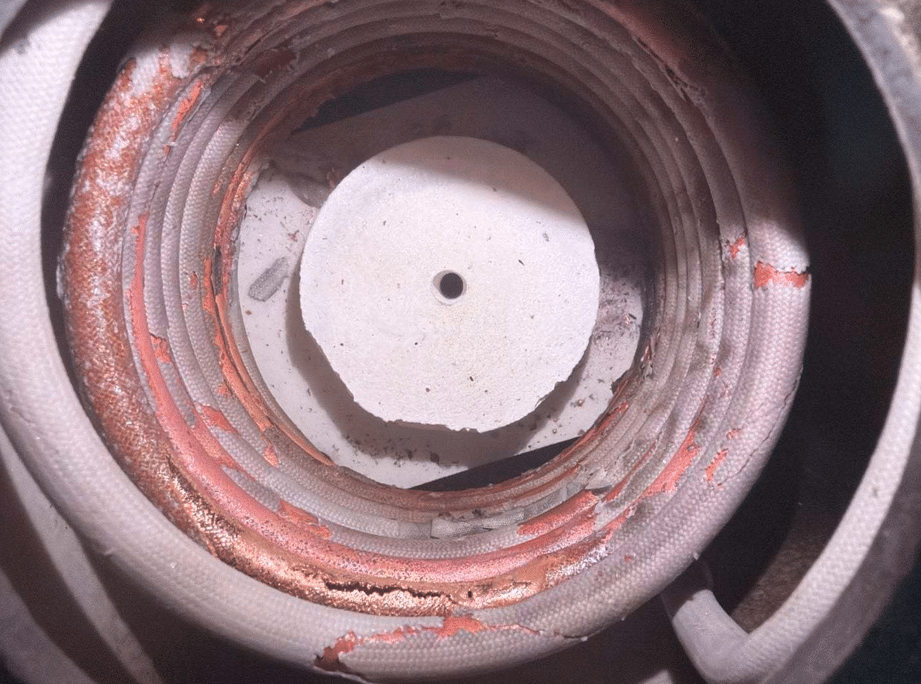
A completely burned induction coil often points to cooling failure or heating without proper water circulation.
Quick diagnosis
If an induction coil burns out during use, first check whether the chiller was started before heating, whether the water inlet and outlet are connected correctly, and whether the cooling water pressure and flow are enough. If the coil has small arc holes or local punctures, check voltage, frequency, furnace lining dryness, and coil insulation thickness.
Complete coil damage
Usually caused by no water circulation, blocked hoses, low flow, low water pressure, or reversed inlet and outlet pipes.
Hot crucible damage
A hot crucible placed into a stopped or poorly cooled coil can transfer heat back to the copper tube and burn the insulation.
Local holes or punctures
Often related to mismatched power supply, wet furnace lining, vapor release, or insufficient insulation between coil turns.
Operator checklist before heating
This start-up check is suitable for gold melting furnaces, silver melting furnaces, platinum melting furnaces, and vacuum induction melting equipment.
Confirm water circulation before switching on induction power.
Turn on the water chiller before heating and check the water return.
Use the cooling specification required for the furnace power and coil size.
Make sure the inlet and outlet hoses follow the machine marking.
Use clean water and filter connectors to reduce blockage in the copper tube.
Do not run high-power heating with an empty coil.
Do not put a hot crucible back into a coil after cooling has stopped.
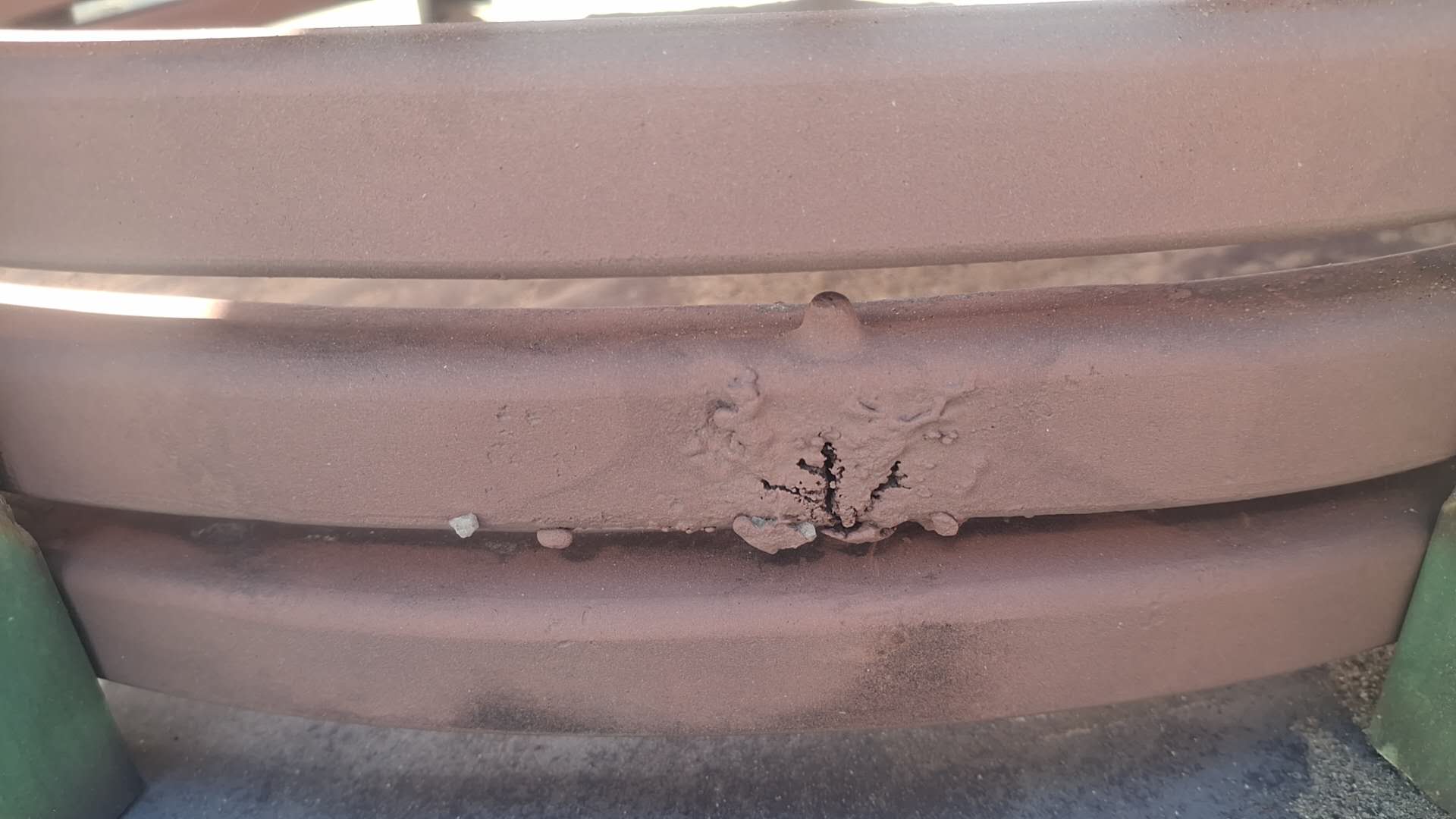
Local holes or arc marks usually require checking electrical parameters, lining drying, and insulation quality.
Induction coil burn-out causes and solutions
Use the damage pattern to check the most likely cause first. This saves time and helps avoid replacing the coil before the real problem is fixed.
| Problem found on coil | Likely cause | Correct action |
|---|---|---|
| Protective casing is burned over a large area | Chiller was not turned on before heating, or water circulation stopped during operation. | Follow the sequence: cooling first, then power on, then heating. Add this step to the operator's daily start-up list. |
| Coil temperature rises quickly | Cooling hose or copper tube is blocked by water impurities. | Clean the tank, blow the hose with compressed air, flush the line, and use cleaner water with filter connectors. |
| Machine heats but coil is unstable | Water flow rate or pressure is lower than the furnace requirement. | Confirm required flow and pressure with the manufacturer. For higher-power induction furnaces, do not use an undersized chiller. |
| Coil overheats after installation | Water inlet and outlet are connected incorrectly. | Reconnect the hoses according to the machine marking and check the water return before each heating cycle. |
| Coil insulation melts after shutdown | A hot crucible was placed inside the coil when cooling had stopped. | Let the crucible cool naturally outside the machine. Keep cooling active while the coil is still hot. |
| Small holes or arc punctures appear | Voltage or frequency does not match the machine specification. | Confirm voltage, phase, frequency, and power supply condition before purchasing and before first commissioning. |
| Arcing happens after furnace lining repair | Furnace lining was not dried enough; steam or chemicals condensed near the coil. | Dry the lining gradually at 300-500 degrees C before full operation, then increase power step by step. |
| Arcing between coil turns | Insulation thickness is not enough or insulation coating is damaged. | Repair according to the supplier's insulation method and keep sufficient insulation thickness on each turn. |
How to prevent induction coil damage in daily production
For gold and silver melting
Keep the crucible in the coil during heating, avoid empty-coil high-power running, and check cooling water before every batch.
For platinum melting
Platinum melting uses higher temperatures and stricter refractory conditions. Confirm crucible material, lining dryness, and coil insulation before full power.
For vacuum induction melting
Check water circulation, vacuum system, power supply, and furnace lining together. A failure in one system can still damage the induction coil.
Related CDOCAST equipment and service pages
These internal links help buyers connect the induction coil maintenance guide with the correct furnace, chiller, and technical support pages.
FAQ about induction coil usage
Why does an induction coil burn out completely?
Complete burning usually happens when the coil works without enough cooling water. The common reasons are forgetting to start the chiller, blocked hoses, low water flow, low water pressure, or reversed inlet and outlet pipes.
Why does an induction coil have small holes or arc marks?
Small holes and arc marks are often related to electrical arcing. Check voltage, frequency, insulation thickness, furnace lining moisture, and whether the lining was dried properly before full-power heating.
Can I heat an induction furnace without a crucible inside the coil?
No. High-power heating without a crucible is dangerous because most of the energy can be absorbed by the coil itself. This can burn the induction coil very quickly.
What water should be used for induction coil cooling?
Clean water is important. Where possible, use distilled water or drinking water instead of dirty tap water, keep the tank clean, and install filter connectors to reduce blockage inside the copper tube.
How should furnace lining be dried before normal melting?
After lining repair or replacement, heat gradually at about 300-500 degrees C before full operation. This helps remove moisture and reduces arcing risk near the induction coil.
Need help checking an induction coil failure?
Send CDOCAST photos of the burned area, machine model, chiller condition, water pipe connection, and power supply information. Our engineer can help judge whether the cause is cooling, operation, electrical matching, or insulation.