
The Importance of the Rolling Mill in the Coinage Line
Coinage line technical guide
The Importance of the Rolling Mill in the Coinage Line
In a gold silver coin minting line, the rolling mill is not only used to make metal thinner. It controls the strip thickness, flatness, surface quality, hardness and grain structure before coin blank punching and final striking.
If the rolling stage is unstable, later equipment such as the hydraulic punching machine, annealing furnace, polishing machine and hydraulic coin minting press cannot fully correct the problem. For a professional coinage line, precision rolling is the foundation of accurate coin blank weight and sharp minting quality.
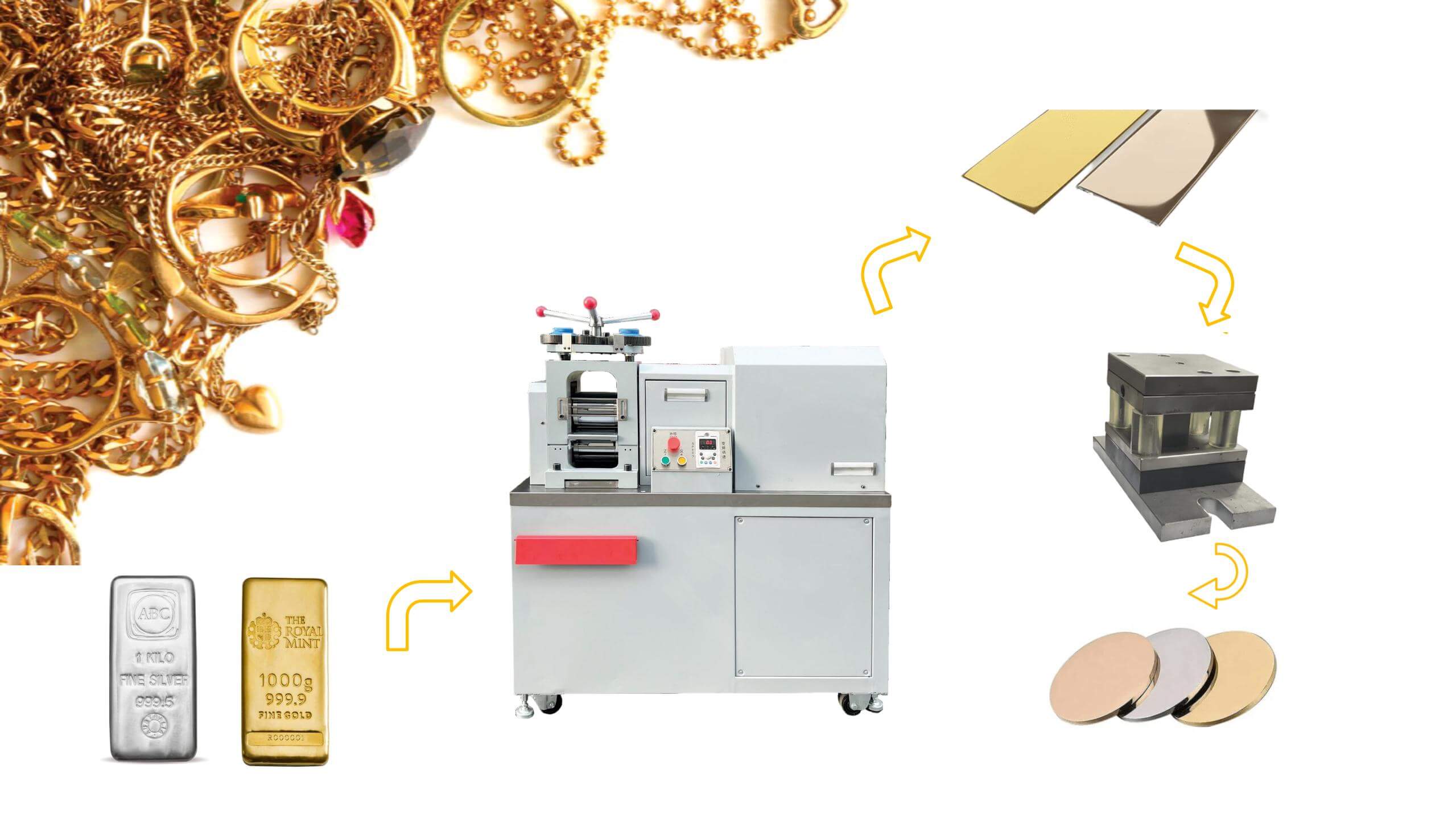
Precision rolling prepares gold and silver strip before blank punching and coin striking.
Watch rolling mill in coinage line videoSee how rolled strip supports coin blank accuracy before minting.Why the rolling mill is a core machine in coin production
The original article is correct: without precisely controlled rolling, high-quality coins are difficult to produce. The reason is simple: coin blank area is fixed by the punching die, so final blank weight mainly depends on strip thickness and thickness consistency.
1. Coin blank weight accuracy
Rolling mill thickness control directly affects coin blank volume. Even a small variation in gold or silver strip thickness can create overweight or underweight blanks after punching.
2. Surface quality before striking
Polished rollers and clean rolling conditions help create a smoother strip surface. A clean strip reduces scratches, pits and visible defects on finished gold and silver coins.
3. Hardness and ductility balance
Rolling changes the metal structure. The reduction per pass, rolling speed and annealing schedule should be controlled so coin blanks are not too hard for the minting die.
The practical coinage line process
A complete gold silver coin minting line normally starts with preparing plate or strip, then uses a rolling mill to reach the target thickness. After rolling, the strip enters blank punching, edge treatment, annealing, cleaning, polishing, die striking, inspection and packaging.
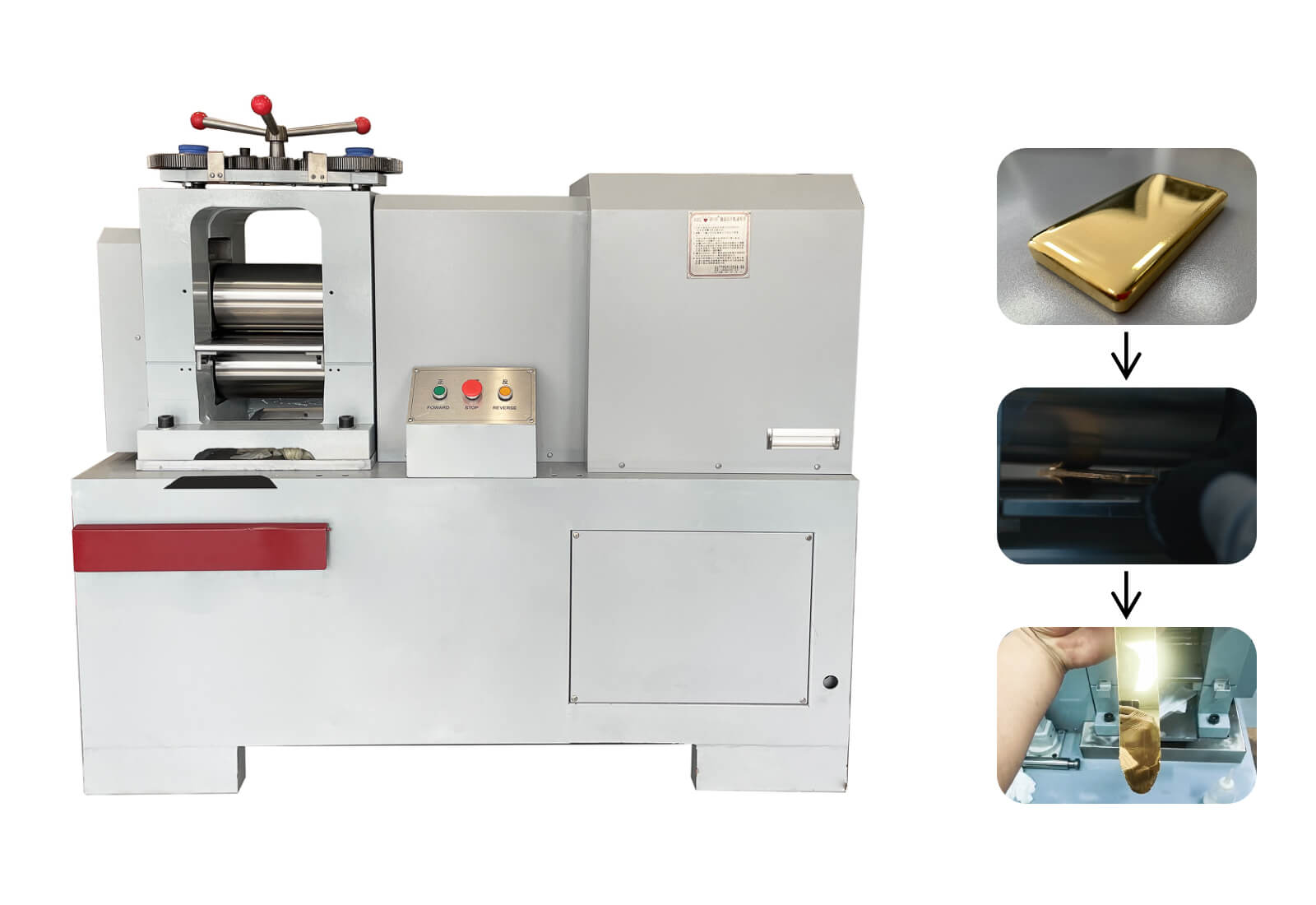
A precision rolling mill prepares uniform strip for coin blank punching.
Four technical points controlled by the rolling mill
Precise thickness control
The rolling mill provides the dimensional foundation for coin blank weight. If thickness is uneven, the punching machine may still cut a clean blank, but the blank weight will not be stable. This is why coinage lines require accurate roll gap adjustment and repeatable rolling passes.
Uniform mechanical properties
Cold rolling increases hardness and strength. For gold and silver coin blanks, this must be balanced with annealing. If the blank is too soft, it may deform. If it is too hard, the minting die may wear faster and the pattern may not fill completely.
Superior surface quality
The roller surface directly affects the strip surface. For proof-style coins, commemorative coins and high-premium bullion coins, surface preparation before striking is important because visible strip defects can remain on the finished coin.
Grain structure optimization
Rolling, intermediate annealing and further rolling can refine the grain structure. A fine and uniform grain structure supports clearer relief details, more stable metal flow and better repeatability during hydraulic coin minting.
How rolling defects affect later coinage processes
| Rolling issue | Possible effect on coin blank | Possible effect after minting | Practical control point |
|---|---|---|---|
| Uneven strip thickness | Coin blank weight fluctuation after punching. | Finished coins may fail weight tolerance inspection. | Use controlled roll gap, stable feeding and multiple measured passes. |
| Strip is too hard | Blank may be difficult to form during striking. | Pattern detail is shallow; minting die load increases. | Add proper annealing after rolling or before final striking. |
| Surface scratches | Defects remain on the blank surface. | Scratches may appear in mirror fields or flat areas. | Keep rollers polished, clean the strip and avoid metal dust during rolling. |
| Unstable flatness | Blank may not sit evenly in the die. | Uneven relief height or incomplete pattern filling. | Control reduction per pass and use suitable straightening or annealing. |
Key equipment connected with the rolling mill
A rolling mill performs best when it is matched with the correct upstream and downstream machines. For a stable gold silver coin minting line, buyers should evaluate the full process instead of selecting each machine separately.
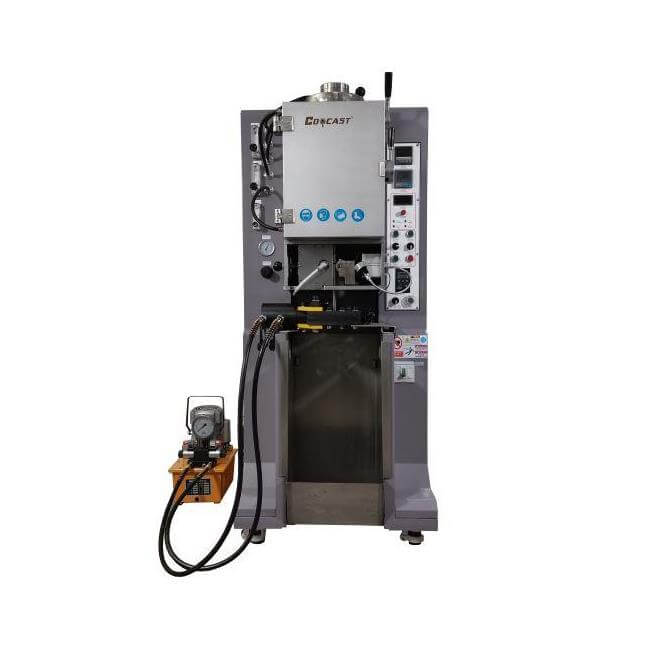
Continuous casting machine
Prepares gold or silver strip material before rolling. Uniform strip casting reduces later rolling difficulty.
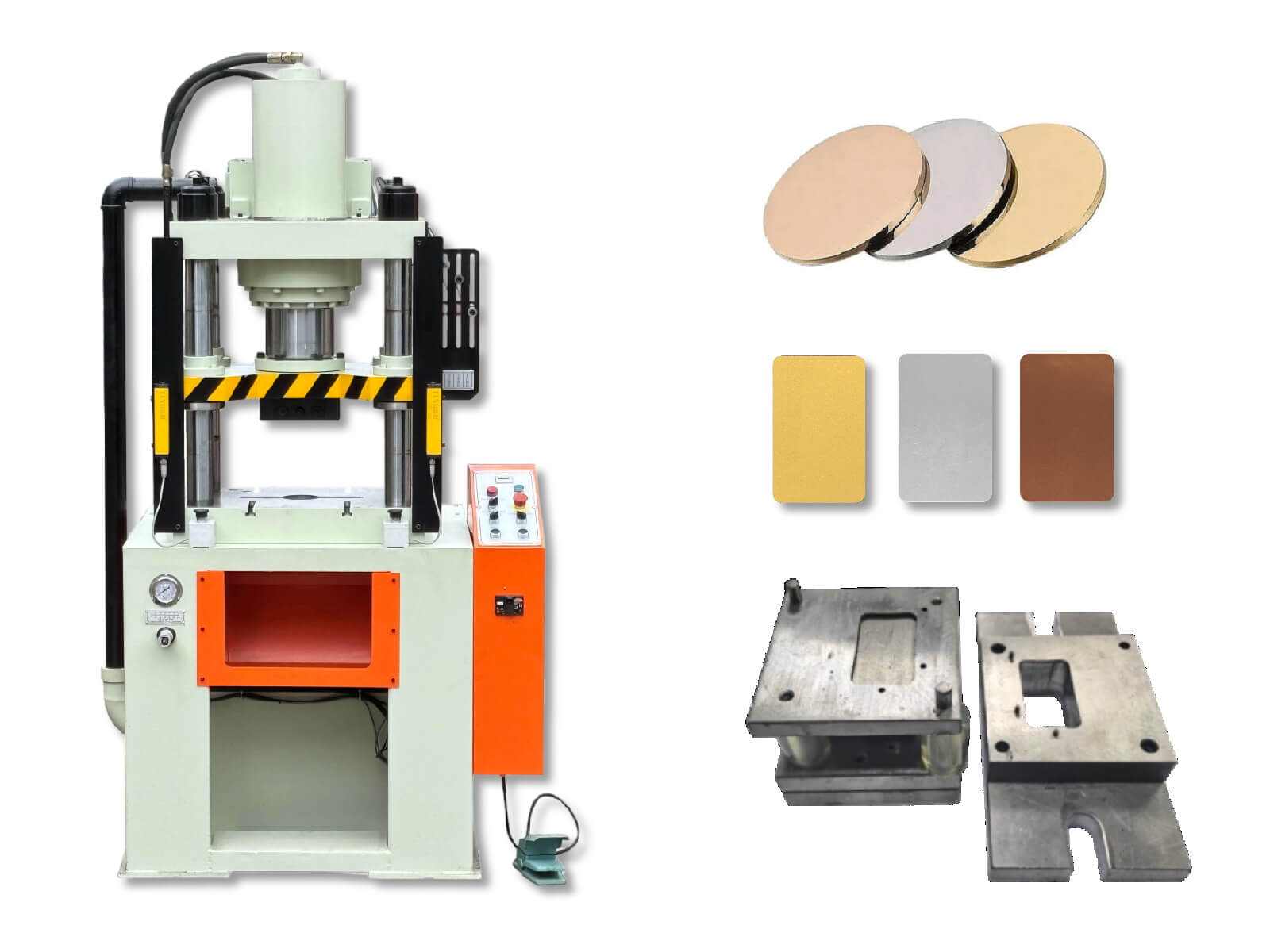
Hydraulic punching machine
Punches round coin blanks from rolled strip. Accurate strip thickness helps achieve stable blank weight.

Hydraulic press for minting
Strikes the coin blank with custom minting dies. Proper rolling and annealing make die striking more stable.
Buyer checklist for a rolling mill in a coinage line
When choosing a rolling mill for coin blank production, do not look only at motor power or roller size. The machine should match the metal type, strip width, target coin diameter, blank thickness, reduction schedule and required daily output.
- Confirm gold, silver, alloy type and target coin size before selecting the rolling mill.
- Confirm strip width, initial thickness, final thickness and acceptable thickness tolerance.
- Check whether the line needs intermediate annealing between rolling passes.
- Match rolling speed with the blank punching machine and production capacity.
- Use polished rollers when mirror surface or proof-style coin quality is required.
Related CDOCAST equipment for coinage line setup
FAQ about rolling mill in a gold silver coinage line
Why is the rolling mill important in a coinage line?
The rolling mill controls strip thickness, flatness, hardness, surface condition and grain structure. These factors directly affect coin blank weight accuracy, punching quality and final minting detail.
Can a punching machine correct uneven strip thickness?
No. The punching machine controls blank shape and diameter, but blank weight is mainly determined by strip thickness. If the strip thickness is unstable, punched blanks will also have unstable weight.
Does gold silver strip need annealing after rolling?
Often yes. Rolling increases hardness through work hardening. For coin minting, intermediate annealing or final blank annealing helps restore ductility and improves metal flow during die striking.
What should buyers confirm before choosing a coinage line rolling mill?
Buyers should confirm material type, target coin weight, coin diameter, strip width, initial thickness, final thickness tolerance, daily output and whether the process requires annealing between rolling passes.
Is the rolling mill only used for coins?
No. A precision rolling mill can also be used for gold silver sheet, strip, minted bar blanks, medallions and other precious metal products that require accurate thickness and surface quality.
Technical quotation support
Need a rolling mill selection plan for your coinage line?
Share your coin size, material, target blank thickness, production output and existing machines. CDOCAST can help match the rolling mill with continuous casting, punching, annealing and hydraulic coin minting equipment.