
Metal Powder Water Atomization Equipment

Metal Powder Production Buyer Guide

Metal Powder Atomization Equipment Buyer’s Guide: Water vs Gas Atomization

Metal powder atomization equipment must be selected from the required powder specification—not machine capacity alone. This guide explains how to compare high-pressure water atomization, inert-gas atomization, vacuum systems and post-processing equipment for gold, silver, copper, stainless steel, iron, platinum and specialty alloys.

metal powder atomization equipment water atomization machine gas atomization equipment metal powder production line
CDOCAST metal powder atomization equipment for water atomized metal powder production

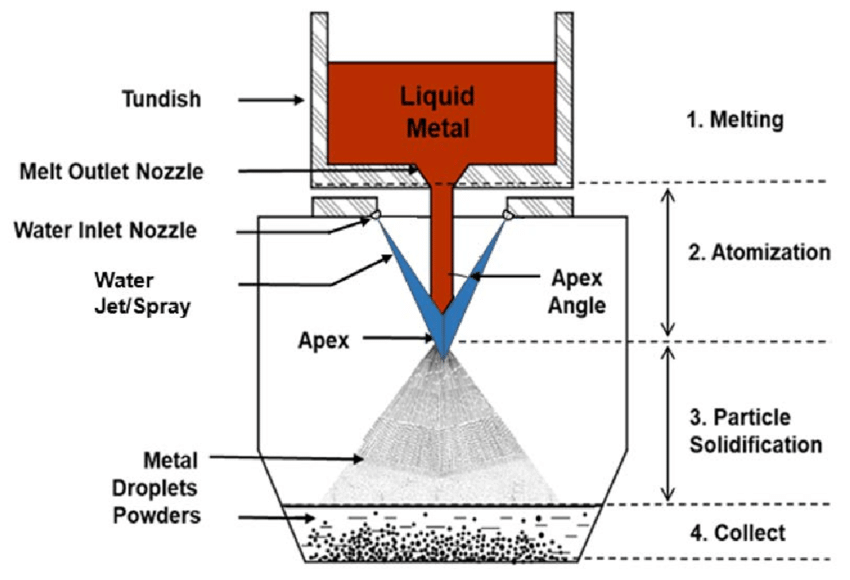
A complete powder line connects melting, controlled metal delivery, atomization, cooling, collection, drying, sieving and powder qualification.

Water or gas atomization?

Choose high-pressure water atomization when economical production, irregular powder, larger throughput, pressing, sintering or refining surface area is the priority. Choose inert-gas atomization when spherical morphology, lower oxygen exposure, flowability and demanding additive-manufacturing feedstock are required. Vacuum melting or a fully controlled atmosphere may be necessary for reactive or high-value alloys. The purchasing specification should define particle-size distribution, morphology, chemistry, oxygen limit, yield and downstream application before equipment is quoted.

high pressure water atomization process for metal powder production

When Should You Choose Metal Powder Atomization?

Choose atomization when the downstream process needs powder rather than grains, flakes or solid feed. The molten stream is broken into droplets by high-velocity water or gas and rapidly solidified. Process conditions determine the resulting particle-size distribution, shape, surface condition, chemistry and usable yield.

A metal powder atomization line is suitable when production requires repeatable powder for pressing, sintering, powder metallurgy, chemical processing, research or selected additive-manufacturing applications. It is not the economical choice when the next step only needs easily handled remelting or refining feed.

Choose by final material form: use atomization for specified powder, a metal granulator for larger remelting or refining grains, and a metal flake making machine for thin refining feed.

Water Atomization vs Gas Atomization Equipment

The correct process is determined by powder acceptance criteria and downstream use.

Decision factorHigh-pressure water atomizationInert-gas atomization
Typical particle formIrregular to sub-spherical particles with comparatively rough surfacesMore spherical particles with smoother surfaces when process conditions are suitable
Atmosphere and oxidationWater contact and process conditions can produce greater surface oxidationInert gas and controlled melting can reduce oxygen exposure
Production economicsOften selected for economical, higher-volume powder productionHigher gas, tower, control and atmosphere costs
Post-processingWater separation, drying and sieving are normally requiredCollection, classification and controlled powder handling are required
Common applicationsPressing, sintering, MIM feed preparation, refining, chemical use and general powder metallurgyAdditive manufacturing, thermal spray, HIP and applications requiring spherical, flowable powder
Best purchasing criterionTarget mesh distribution, yield, chemistry, moisture and compaction behaviorParticle-size distribution, sphericity, oxygen, satellites, flowability and apparent density

How a Metal Powder Atomization Line Works

Powder production continues after the molten metal has been atomized.

01Melt and VerifyMelt the specified metal or alloy and confirm temperature, chemistry and atmosphere.
02Hold in the TundishMaintain a stable superheat and controlled molten-metal head above the nozzle.
03Atomize the StreamHigh-velocity water or inert gas breaks the liquid stream into droplets.
04Cool and CollectDroplets solidify in the tower and enter the designed collection system.
05Dry or ConditionWater-atomized powder is separated and dried; gas powder is recovered under controlled conditions.
06Sieve and QualifyClassify fractions, remelt oversize material and test powder against the acceptance specification.

Core Systems in Water Atomization Equipment

Each subsystem must be sized as part of one process rather than purchased independently.

Induction Melting FurnaceProvides controlled melting capacity, temperature measurement and metal delivery.
Heated TundishStabilizes molten flow and prevents premature freezing before the atomizer.
Atomizing NozzleControls water-jet angle, velocity and interaction with the molten stream.
High-Pressure PumpSupplies the pressure and flow required by the high pressure water atomization system.
Atomization TowerProvides space for droplet breakup, cooling, containment and collection.
Water and Cooling LoopManages process water, temperature, filtration and heat removal.
Drying and SievingRemoves moisture and separates the powder into usable size fractions.
PLC and Safety SystemCoordinates interlocks, temperature, pressure, pumps, alarms and batch records.

Metal Powder Atomization Equipment Configurations

Compare the process route and metal range before comparing nominal batch capacity.

small precious metal water atomization powder making tank
Laboratory and refining

Small Water Atomization Powder Tank

This entry-level precious metal powder making equipment is paired with an existing melting furnace. It suits small gold or silver refining batches where irregular fine powder is acceptable and manual operation can be controlled safely.

small batchesseparate meltingeconomic entry
10 to 50 kg integrated metal powder water atomization equipment
Integrated production

10–50 kg Integrated Water Atomization Machine

This metal powder water atomization machine supports compatible gold, silver, copper, iron and alloy applications. Configured as a copper powder atomization machine, its melt delivery, nozzle and water system must be matched to the required powder fraction.

goldsilvercopperiron
tilting high temperature metal powder atomizer for platinum iron and stainless steel
High-temperature metals

Tilting High-Temperature Powder Atomizer

Uses a tilting furnace and high-temperature transfer arrangement for platinum, iron and other high-melting alloys. Stainless steel powder atomization requires the crucible, tundish, nozzle, superheat and protective atmosphere to match the actual grade.

platinumironstainless steel
50 to 500 kg platform type industrial metal powder atomization plant
Industrial capacity

50–500 kg Platform Water Atomization Plant

This custom metal powder production equipment is designed for large batches and multiple compatible metals. The platform layout separates melting, heated delivery, atomization, cooling, water treatment and powder recovery.

large throughputcustom layoutall-metal evaluation
vacuum inert gas atomization equipment for spherical 3D printing metal powder
Spherical powder

Vacuum Inert-Gas Atomization System

A 3D printing metal powder atomizer is selected for spherical, lower-oxygen and flowable powder. Gas type, tower size, vacuum level, melting route and powder classification are engineered around the alloy and target fraction.

spherical powder3D printingcontrolled atmosphere

Powder Specifications to Define Before Buying

A powder application is not fully specified by mesh or micron size alone.

Particle-size distribution and yield

State the required fraction, allowable oversize and fines, and minimum usable yield per batch. Ask how yield will be measured during acceptance testing.

Particle morphology

Define irregular, sub-spherical or spherical expectations and how shape will be measured. Water and gas atomization do not produce identical morphology.

Chemistry and oxygen limit

Provide the alloy composition, allowable element loss, oxygen target and contamination restrictions. The melting and atomization atmosphere must support these limits.

Flowability and apparent density

These properties matter for die filling, powder spreading and consistent downstream feeding. Define the test method rather than using only descriptive words.

Moisture and drying requirement

Water-atomized powder requires a validated separation and drying process. Specify final moisture, drying atmosphere and safe powder handling route.

Application and qualification method

State whether powder is for refining, pressing, sintering, MIM, thermal spray or additive manufacturing, then agree on sampling and laboratory tests.

Powder Problems and Process Variables to Check

Output problems often come from interacting melt, nozzle, pressure and post-processing conditions.

Observed resultVariables to investigatePurchasing implication
Powder is too coarseAtomization pressure, nozzle geometry, molten flow rate, superheat and alloy propertiesRequire a sample test and usable-yield target for the specified fraction
Excessive finesPressure too high, unstable stream, nozzle interaction or classification settingsDefine both minimum and maximum particle fractions
High oxygen or dark surfaceMelting atmosphere, water chemistry, drying delay, leaks and reactive alloy elementsConsider stronger inert-gas control, vacuum melting or gas atomization
Nozzle or tundish blockageLow superheat, insufficient tundish heating, unsuitable outlet size or delayed pouringConfirm metal-specific heating and flow-path materials
Poor flowabilityIrregular morphology, satellites, moisture, broad distribution or agglomerationSelect the process from the downstream flow requirement, not price alone
Low recovered yieldPowder carried into water loop, collection losses, filter design or unsuitable classificationInclude mass balance and powder recovery in the acceptance test

Metal Powder Atomization Equipment Purchase Checklist

Provide these details before requesting a final process design or quotation.

Metal and full alloy composition, including reactive elements
Normal batch, maximum batch and required daily throughput
Required particle-size distribution and minimum usable yield
Target morphology, oxygen, chemistry, moisture and density
Downstream use: refining, pressing, MIM, sintering or AM
Water atomization, gas atomization or process evaluation required
Melting atmosphere, vacuum requirement and contamination limits
Drying, sieving, recycling and powder-packaging requirements
Power, gas, cooling water, drainage, ventilation and floor layout
Acceptance material, sampling method and laboratory test standard
Powder safety: metal powders can present fire, explosion, reactivity, inhalation and static-discharge hazards depending on composition and particle characteristics. Powder recovery, drying, sieving, dust collection, grounding, inerting and storage require a site-specific hazard assessment. Review the OSHA combustible-dust guidance. For additive-manufacturing powder qualification, NIST highlights particle size, morphology, flowability, density and related measurement needs in its metal powder metrology work.

Related Metal Powder and Feed Preparation Equipment

Continue to the product and process pages that match the required output.

Metal Powder Atomization Equipment Buyer FAQ

Direct answers to questions that affect process selection and acceptance testing.

What is the main difference between water and gas atomized metal powder?

Water atomization usually produces irregular to sub-spherical powder and is often selected for economical production, pressing, sintering and refining applications. Inert-gas atomization generally produces more spherical, flowable powder with lower oxygen exposure and is preferred for demanding additive-manufacturing and thermal-processing applications.

How do I choose metal powder atomization equipment?

Begin with the alloy, required particle-size distribution, morphology, oxygen limit, usable yield and downstream application. Then define batch size, daily throughput, post-processing, factory utilities and acceptance test methods. Capacity should be selected only after the powder specification is clear.

Can water atomization equipment make spherical powder for 3D printing?

Water atomization can produce some sub-spherical particles, but it normally does not provide the same spherical morphology and flow behavior expected from a properly designed inert-gas atomization process. If the powder is intended for powder-bed additive manufacturing, qualify it against the actual machine and feedstock specification.

Which metals can be processed by a water atomization machine?

Compatible systems can be engineered for gold, silver, copper, iron, stainless steel, platinum and other alloys, but one standard configuration is not suitable for every metal. Melting temperature, crucible compatibility, oxidation, water reactivity, nozzle design and required atmosphere must be evaluated for the exact composition.

Why does water atomized powder need drying and sieving?

The powder is collected with process water, so separation and controlled drying are required before dry handling or packaging. Sieving divides the batch into usable fractions, removes oversize particles and supports consistent downstream processing. Drying and screening equipment must be designed around the powder’s safety characteristics.

What determines the particle-size distribution?

Important variables include atomization pressure and flow, nozzle geometry, molten-metal flow rate, alloy properties, superheat, gas or water interaction and collection conditions. A supplier should demonstrate the usable yield in the required fraction using representative material.

What should a powder atomization acceptance test include?

Use the intended alloy and representative batch. Record mass balance, cycle time, operating pressure, temperatures, gas consumption, recovered yield and safety interlocks. Test the agreed particle-size distribution, morphology, chemistry, oxygen, moisture, flowability or density using the stated methods.

Define the Powder Before Selecting the Atomizer

Prepare the alloy, batch range, target particle distribution, morphology, oxygen limit, application and available utilities before comparing equipment.

Discuss Your Powder Specification