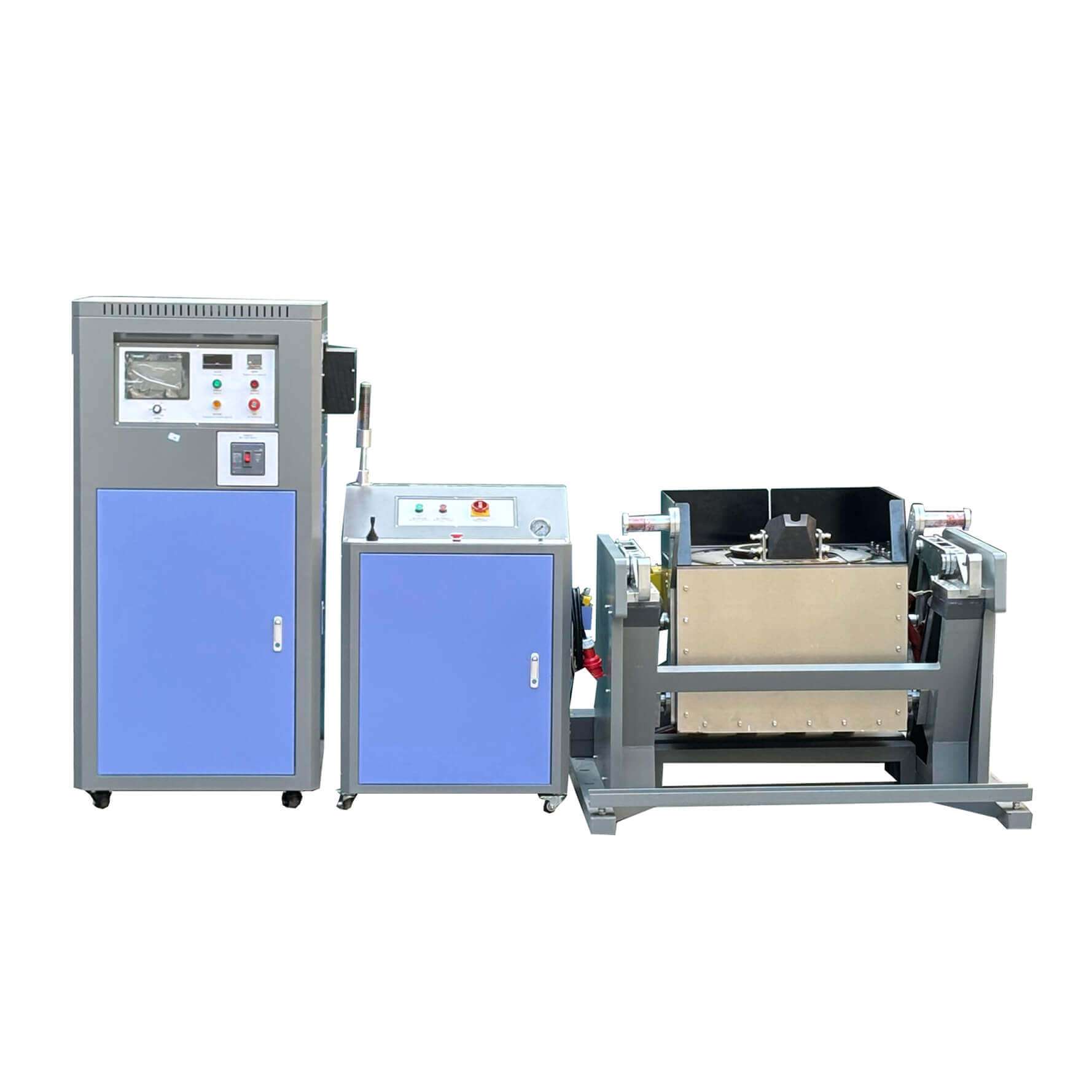
hydraulic tilting metal melting machine

Metal Melting Equipment Buyer Guide

Metal Melting Machine Buyer’s Guide: Capacity, Metal and Tilting Method

A metal melting machine should be selected around the metal or alloy, true batch weight, required pouring method and daily production—not maximum capacity alone. This guide compares compact induction melters, manual and motor tilting furnaces, hydraulic tilting metal melting machines and vacuum induction systems.

metal melting machine induction metal melting machine hydraulic tilting melting furnace gold silver copper melting machine
100 kg hydraulic tilting induction metal melting machine for controlled industrial pouring

Hydraulic tilting is valuable when loaded furnace weight, pouring control and operator distance make manual handling unsuitable.

How do you choose a metal melting machine?

First define the alloy, liquid-metal weight per batch, required melt temperature, batches per shift and desired pouring method. A compact integrated machine suits small precious-metal batches; manual or motor tilting suits controlled small-to-medium production; hydraulic tilting supports heavier loads and remote pouring; vacuum induction melting is selected when oxidation, gas pickup or alloy chemistry requires a controlled atmosphere. Confirm the crucible, power supply, cooling system and acceptance test for the actual metal before ordering.

induction metal melting machines for precious metal and industrial melting applications

What Is an Induction Metal Melting Machine?

An induction metal melting machine uses an alternating electromagnetic field to heat a conductive charge in a crucible. The process offers fast, controllable heating and electromagnetic stirring without direct flame contact. It is used for remelting and alloy preparation in jewelry workshops, precious-metal refineries, foundries, laboratories and industrial metal-processing plants.

The furnace body is only one part of the system. A complete installation normally includes an induction power supply, compatible furnace and crucible, temperature measurement, cooling-water circuit, pouring arrangement, controls and safety interlocks. Vacuum or inert-gas equipment may be added when the metallurgy requires atmosphere control.

Important: “Can melt the metal” is not a complete specification. The machine must also reach the required production rate, hold the correct crucible safely, pour into the receiving mold or ladle, and operate with the available electrical and cooling utilities.

Select a Metal Melting Machine by Batch and Process

Capacity stated for one metal cannot be transferred directly to another because density, crucible volume and thermal requirements differ.

Typical requirementSuitable configurationBest fitCheck before buying
Small precious-metal batchesCompact integrated induction melting machineGold, silver and copper work in jewelry shops, assay rooms and small refineriesActual capacity by metal, crucible handling, single/three-phase supply and cooling duty
Small-to-medium controlled pouringManual tilting metal melting furnaceOperators who need direct, economical control of pouring into moldsLoaded tilting weight, handle position, receiving-mold height and safe working distance
Repeated medium productionMotor or gear-driven tilting furnaceNon-ferrous remelting where powered tilting improves repeatabilityTilting speed, stop control, curved pouring path, gearbox duty and emergency operation
Heavy industrial batchesHydraulic tilting induction furnaceRefineries and foundries requiring stable remote pouring and higher loaded weightHydraulic station, cylinder rating, foundation, discharge path, PLC and safeguards
Oxidation-sensitive or research alloysVacuum induction melting machineSpecial alloys, platinum-group metals and laboratory composition developmentRequired vacuum level, atmosphere, secondary feeding, sampling and vacuum-compatible materials

Metal Melting Machine Configurations

These categories describe different operating requirements rather than simply four sizes of the same furnace.

compact integrated induction metal melting machine for gold silver and copper
Compact precious-metal melting

Integrated Gold, Silver and Copper Melting Machine

A one-piece induction furnace combines the power supply and melting station in a compact footprint. It is suited to small repeatable batches where the operator can safely remove or pour the crucible using the specified handling method.

small batchescompact footprintjewelry and refinery
manual and motor tilting industrial metal melting furnace
Economical controlled pouring

Manual or Motor Tilting Metal Melting Furnace

Tilting the complete furnace avoids lifting a hot crucible with tongs. Manual tilting gives simple direct control, while a motor or geared drive reduces physical effort and supports repeated pouring for compatible small-to-medium batches.

manual tiltingmotor tiltingnon-ferrous metals
100 kg hydraulic tilting metal melting machine for industrial production
Heavy-duty refinery and foundry use

Hydraulic Tilting Induction Metal Melting Machine

A hydraulic cylinder and separate station provide smooth powered tilting for heavier furnace loads. The operator can control pouring from a safer working position, but the installation requires a planned foundation, hydraulic service area and unobstructed molten-metal path.

30–500 kg classremote pouringindustrial duty
vacuum induction melting machine for controlled-atmosphere precious metal and alloy melting
Controlled atmosphere and alloy development

Vacuum Induction Melting Machine

Vacuum or inert-gas melting is selected when air exposure can cause oxidation, gas pickup or loss of reactive alloying elements. Vacuum level, chamber size, pouring system and optional feeding or sampling must be defined from the alloy process.

vacuumprotective atmospherespecial alloys

Manual vs Motor vs Hydraulic Tilting Furnace

The correct choice depends on loaded weight, pouring frequency, trajectory and operator exposure—not automation preference alone.

Tilting methodMain advantageBest suited toLimit to evaluate
Manual handwheel or leverSimple structure, direct feedback and lower system complexitySmaller batches and lower pouring frequencyOperator effort and proximity increase as loaded furnace weight rises
Motor or gear drivePowered motion with repeatable speed and reduced manual effortSmall-to-medium production with a predictable receiving positionThe curved pouring trajectory and emergency recovery method must be planned
Hydraulic cylinderSmooth high-load tilting, remote control and stable speed adjustmentHeavy batches, industrial refineries and foundry installationsHigher installation complexity, hydraulic maintenance and more floor space

Specifications That Matter Before Ordering

A useful quotation should connect each machine specification to the customer’s metal and production target.

Metal and full alloy composition

State every metal and alloy grade, not only “gold,” “copper” or “steel.” Melting temperature, reactivity and crucible compatibility determine the furnace configuration.

True liquid-metal batch weight

Provide normal and maximum weight by metal. The same crucible volume holds very different weights of gold, silver, copper, aluminum and steel.

Throughput per shift

Define batches per hour and operating hours. Include charging, melting, temperature stabilization, slag handling, pouring and preparation for the next batch.

Temperature measurement

Select a thermocouple, immersion probe or infrared instrument appropriate to the material, temperature range, emissivity and required repeatability.

Crucible and lining system

Confirm crucible material, working capacity, service expectation and replacement method using the actual alloy and process temperature.

Power, frequency and local voltage

Verify available three-phase voltage, transformer capacity, cable size, protection and allowable frequency. Do not order from nominal kilowatts alone.

Cooling-water duty

Induction coils and power components need stable flow, pressure and inlet temperature. Size the industrial water chiller for ambient conditions and continuous load.

Pouring and downstream interface

Check spout height, mold or ladle position, tilting arc, guarding, loading access and the route followed by molten metal during normal and emergency operation.

Metal Melting Machine Purchase and Acceptance Checklist

Send these requirements before asking suppliers to compare models or metal melting machine prices.

Metal grades, alloy compositions and required maximum process temperature
Normal batch, maximum batch and required daily molten-metal output
Charge form, dimensions, cleanliness and whether scrap may contain coatings
Preferred crucible-removal, manual, motor or hydraulic pouring method
Available voltage, frequency, transformer capacity and electrical standard
Cooling-water temperature, flow, pressure and local ambient temperature
Floor space, foundation, loading access, ventilation and receiving-mold position
Temperature accuracy, atmosphere control, PLC records and alarm requirements
Required manuals, spare parts, consumables, remote support and operator training
Hot acceptance test using the customer’s alloy, batch weight and pouring method

Safety and Workshop Planning

Molten metal introduces splash, radiant heat, fume, lifting, electrical and water-contact hazards. Machine selection must therefore be combined with a site-specific risk assessment, dry charge preparation, suitable guarding, trained operators, maintained cooling systems and appropriate protective equipment.

The UK Health and Safety Executive warns that moisture entering molten metal can cause an explosion and recommends inspecting and drying charge material before furnace loading. Review its molten-metal safety guidance together with applicable local regulations.

A hydraulic system can increase operator distance during pouring, but it does not replace dry material control, emergency planning or a safe mold and ladle layout.

Before commissioning:
Verify water-flow and over-temperature interlocks, emergency stop, grounding, tilting limits, hydraulic or gearbox condition, dry tools and molds, PPE, exclusion zone, ventilation and written operating procedures. Run the agreed hot test only after the complete installation has passed these checks.

Related Metal Melting Equipment

Use these product pages for model-specific specifications after completing the selection steps above.

Metal Melting Machine FAQ

Answers to the questions buyers should settle before requesting a final configuration.

What size metal melting machine should I buy?

Choose from the normal liquid-metal batch and required batches per shift, then keep reasonable working margin. Do not size the furnace only from the largest batch you may run once. Capacity must be confirmed separately for each metal because density and crucible volume differ.

When should I choose a hydraulic tilting metal melting machine?

Hydraulic tilting is appropriate when loaded furnace weight, pouring frequency or required operator distance makes manual handling unsuitable. It is commonly selected for heavier refinery and foundry batches where smooth powered pouring and remote control justify the additional installation and maintenance.

Can one induction metal melting machine melt gold, silver, copper, iron and steel?

One induction power platform may support several metals, but the furnace, crucible or lining, temperature range, power density and atmosphere must match each alloy. Never assume that a graphite-crucible precious-metal configuration is automatically suitable for iron, steel or every high-temperature alloy.

What is the difference between a melting machine and a vacuum induction furnace?

A standard air-melting machine heats and pours under the workshop atmosphere. A vacuum induction furnace adds a sealed chamber, vacuum pumps and controlled pouring or feeding systems to limit oxidation, gas pickup or unwanted reactions. Vacuum equipment is selected from metallurgical need, not as a general upgrade for every application.

Does an induction melting machine need a water chiller?

It needs a reliable cooling circuit for the induction coil and power components. Short intermittent systems may use a specified recirculating arrangement, while continuous or higher-power production normally requires a correctly sized industrial chiller. Confirm required inlet temperature, flow and pressure with the machine supplier.

What should a factory acceptance test include?

Use the customer’s specified alloy, normal batch weight and intended pouring method. Record cold and hot cycle time, power behavior, temperature measurement, cooling conditions, alarms, tilting control, metal loss, final melt or casting quality and repeatability over an agreed number of batches.

What warranty and spare parts should be confirmed?

CDOCAST’s existing page states a two-year equipment warranty, excluding consumables. Before ordering, confirm the written warranty scope, remote support process, stocked electrical parts, crucibles, linings, sensors, seals and the shipping responsibility applicable to the final quotation.

Define the Process Before Selecting the Machine

Send the metal, alloy, batch weight, shift output, pouring method, voltage and workshop conditions. CDOCAST can then match the melting system, cooling duty and acceptance test to the actual application.

Discuss Your Melting Requirement