
How To Produce Casting & Minting Gold Silver Bars
Casting vs Minting Buyer Guide
How to Produce Casting and Minting Gold Silver Bars
Gold and silver bars are usually made by two different production routes: cast bars and minted bars. Cast bars focus on melting, pouring and natural solidification. Minted bars focus on strip preparation, rolling, blanking, annealing and high-pressure die striking.
This guide explains the process difference, equipment selection and buyer decision logic for refineries, bullion brands, mints and precious metal workshops choosing between casting bars and minting bars.
Short Answer
What is the difference between casting bars and minted bars?
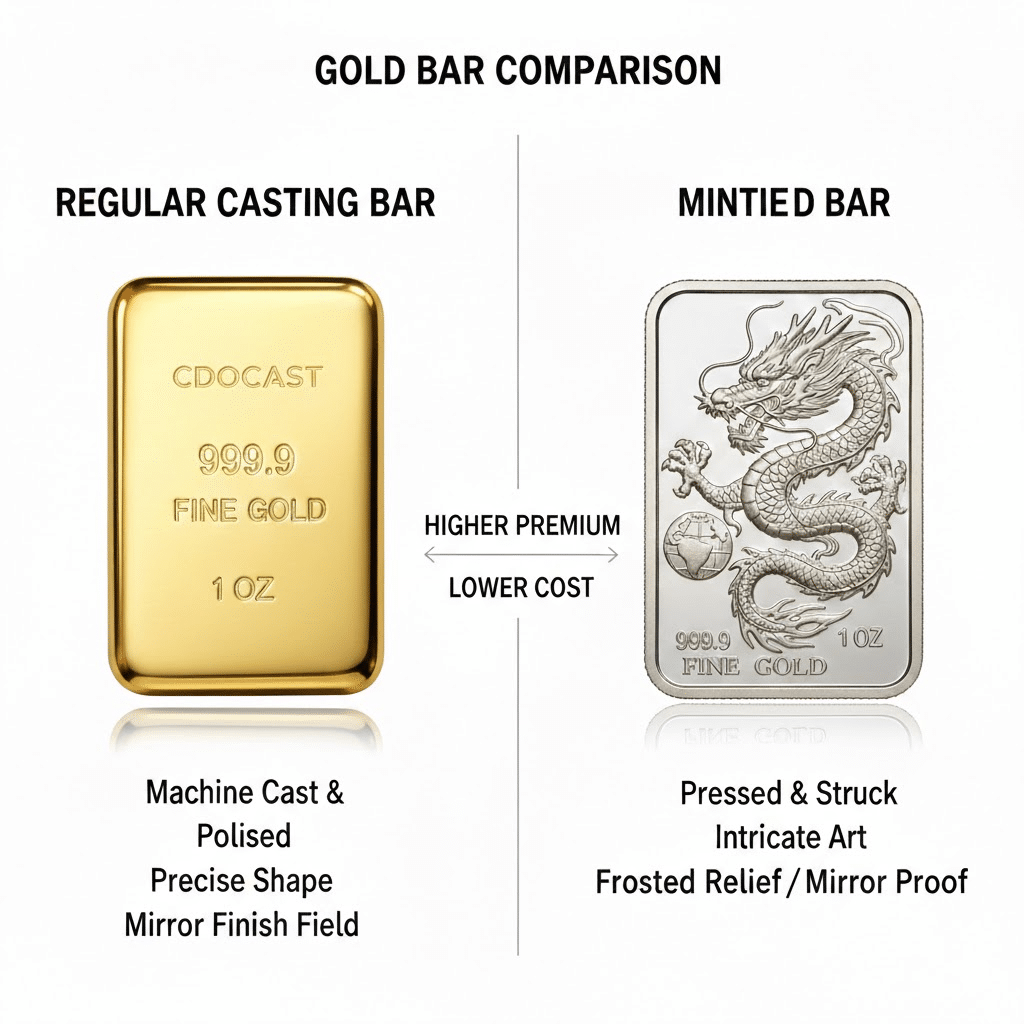
A casting bar is made by melting gold or silver and pouring it directly into a preheated mold. The bar shape is formed during cooling, so the surface keeps natural cooling lines and a more industrial bullion appearance.
A minted bar starts from rolled precious metal strip. The strip is punched into blanks, softened when needed, then struck by a hydraulic press and precision dies to create sharper logos, flatter fields and a higher retail premium.
Simple buying logic
- Choose casting if you need fast bullion output, lower investment and larger bar sizes.
- Choose minting if you need premium appearance, sharp design details and branded retail packaging.
- Use vacuum casting or controlled pouring when surface quality and oxidation control are important.
- Use rolling mill, punching machine and hydraulic press when precision bar dimensions are required.
Two Production Routes
Casting bar route vs minted bar route
Casting Bar Production Route
Best for bullion reserves, commodity trading and simple investment bars.

- Gold or silver is melted in an induction melting furnace.
- The molten metal is poured into a preheated graphite or metal mold.
- The mold controls bar size while cooling creates the natural cast surface.
- Logo and weight information can be added by stamp, laser marking or simple engraving.
Minted Bar Production Route
Best for retail bars, gift bars, collection bars and brand premium products.
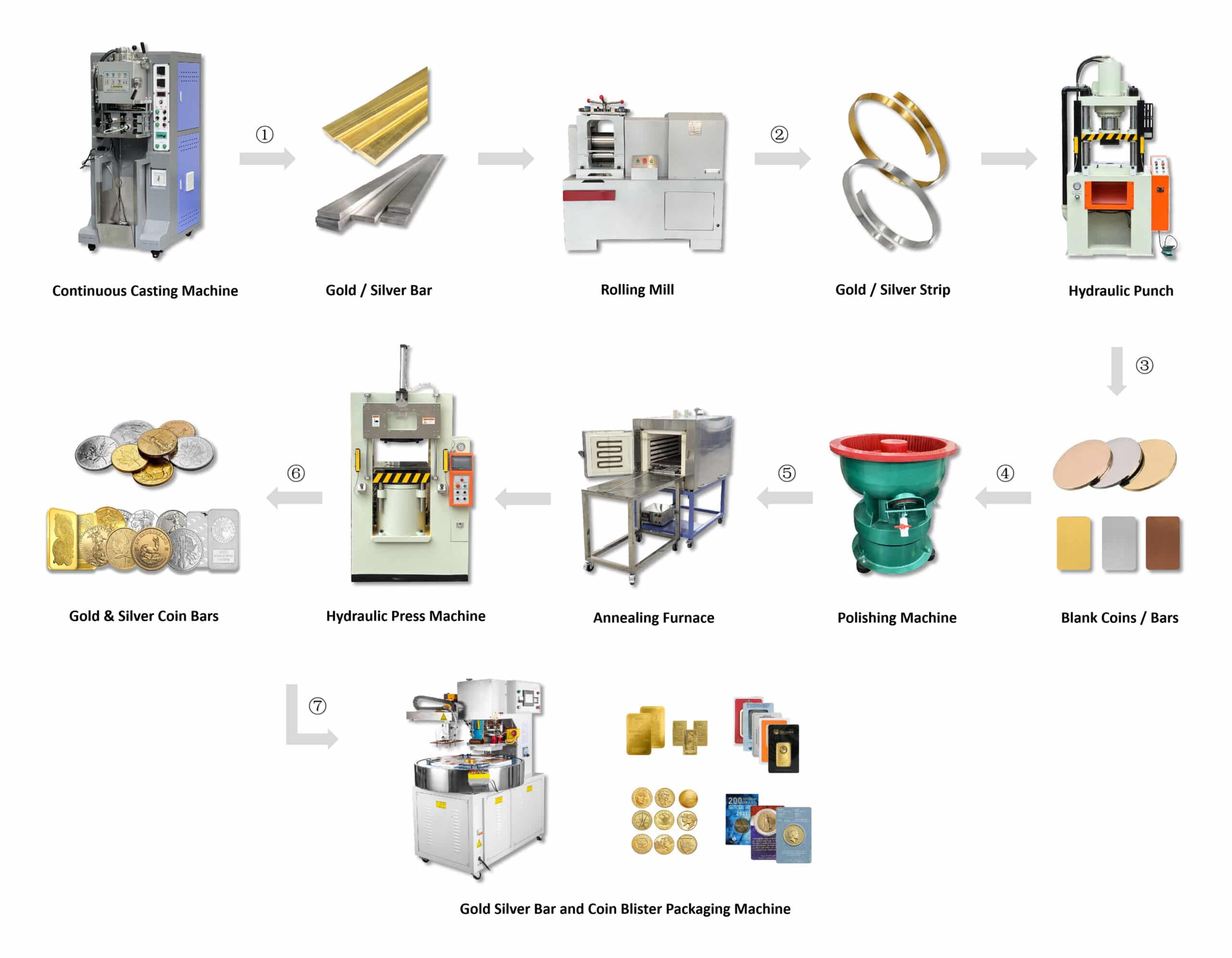
- Continuous casting machine prepares uniform gold or silver plate or strip.
- Rolling mill reduces the strip to accurate thickness with better flatness.
- Hydraulic punching machine cuts blanks to the required size and weight.
- Annealing furnace softens blanks before final hydraulic press minting.
Minted Bar Process
Why minted gold silver bars need more equipment
Equipment Comparison
Casting bar equipment vs minted bar equipment
| Production Stage | Casting Bar | Minted Bar |
|---|---|---|
| Melting and forming | Induction melting furnace and bar mold form the final bar directly. | Continuous casting machine prepares uniform strip or plate for later processing. |
| Thickness control | Mainly controlled by mold dimensions and pouring volume. | Rolling mill controls thickness, flatness and strip quality before blanking. |
| Shape and weight | Mold size determines the bar shape; final weight depends on pouring control. | Hydraulic punching machine cuts blanks to controlled size and weight. |
| Logo and design | Normally stamped, laser marked or engraved after cooling. | Hydraulic press and precision minting dies create brand logo, purity, serial number and relief pattern. |
| Surface style | Natural cast texture, cooling ripples and heavier bullion appearance. | Mirror, satin or patterned surface with sharper detail and stronger retail value. |
| Packaging | Can be packed in plastic bags, boxes or blister cards depending on market. | Often sealed in blister packaging with assay card and anti-counterfeit design. |
Key Machines
Core equipment used in minted bar production
Rolling Mill
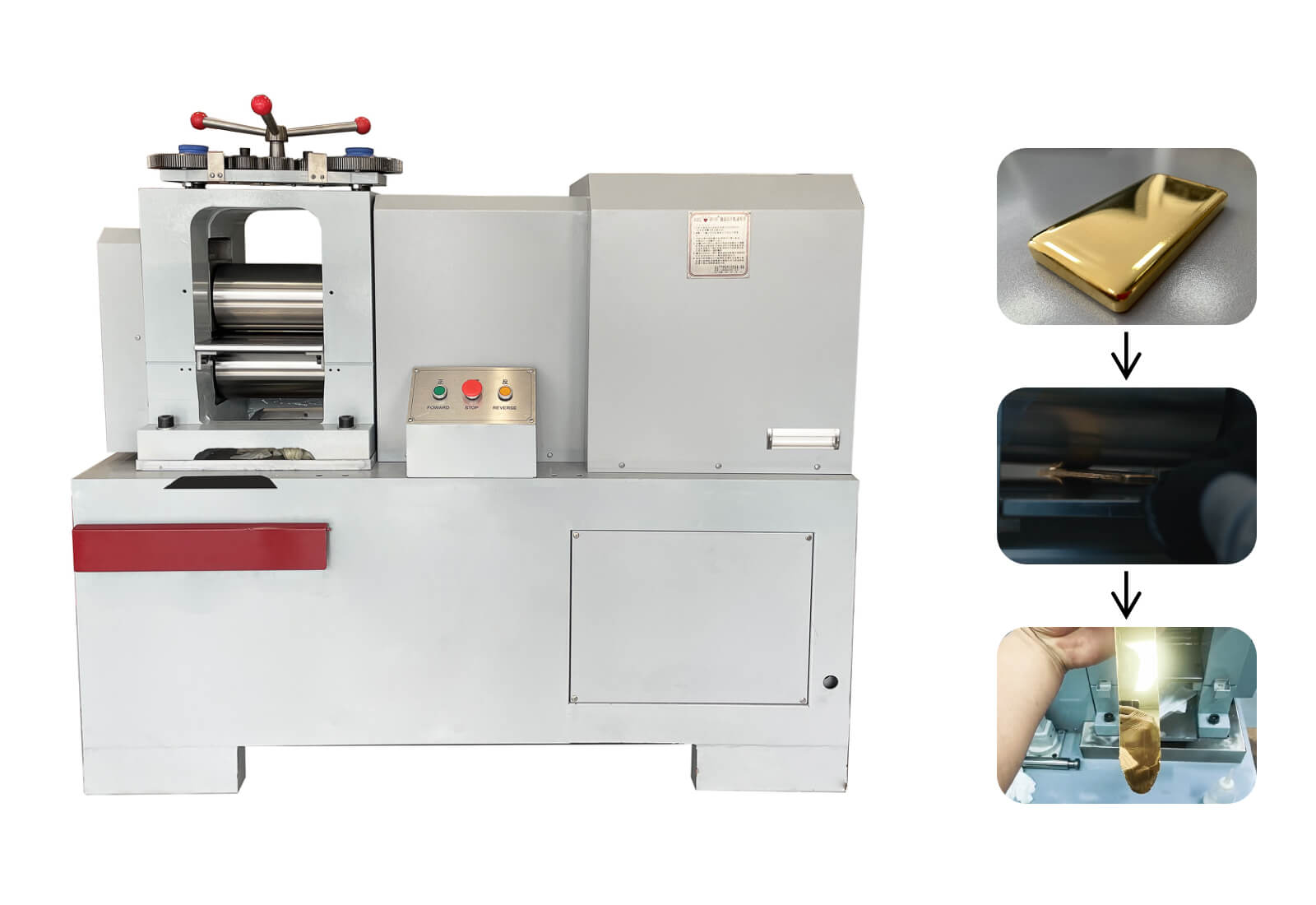
The rolling mill compresses cast plate into accurate gold or silver strip. Stable thickness is the foundation for blank weight, die life and final bar appearance.
Hydraulic Punching Machine
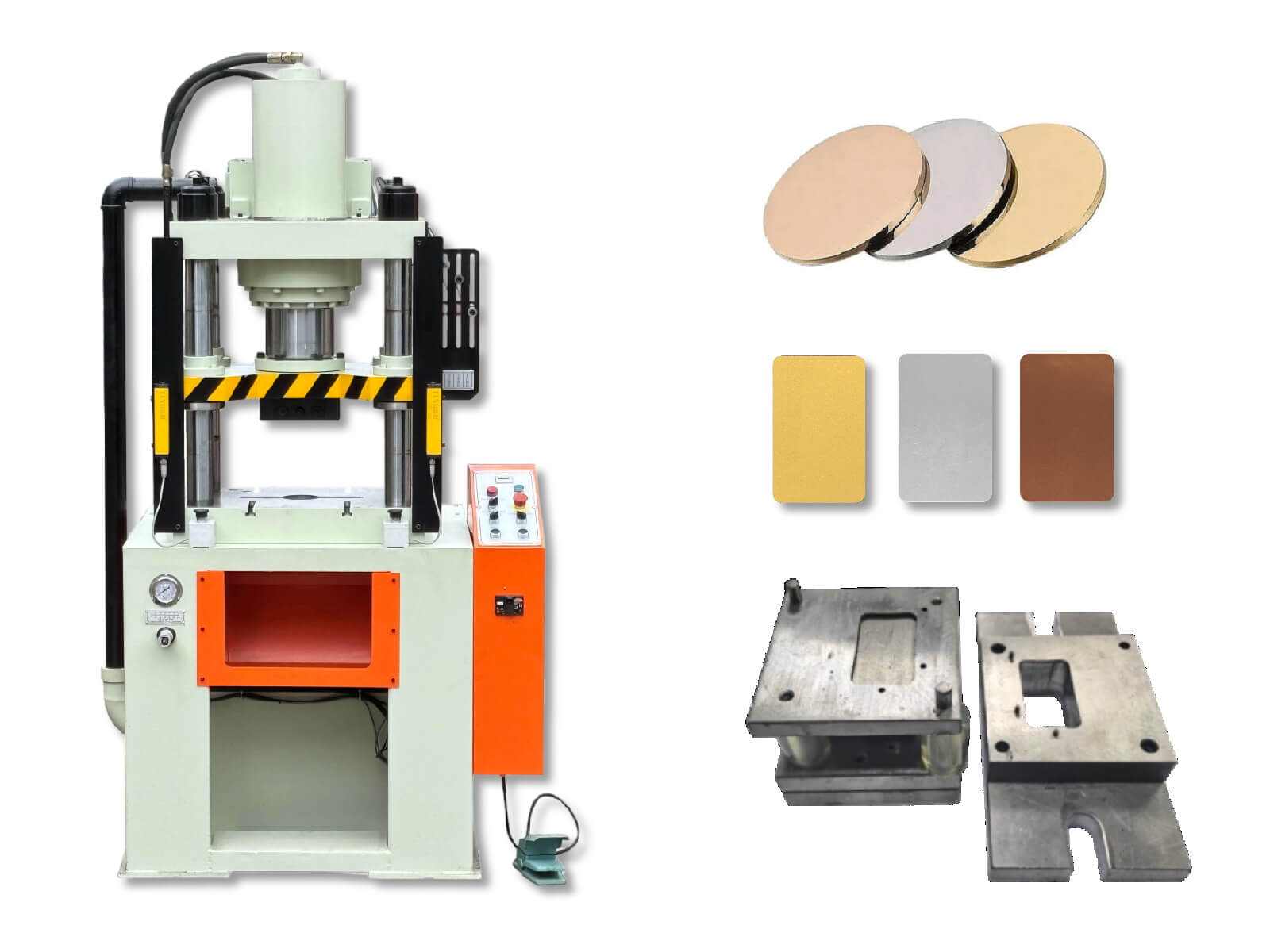
The punching machine cuts rectangular or special-shaped blanks from the strip. This step improves size consistency before hydraulic press minting.

Hydraulic Press and Dies
The hydraulic press strikes softened blanks with precision dies, forming logos, weight, purity and relief pattern in one controlled pressing cycle.
Process Selection
Which process should a buyer choose?
For commodity trading, investment bullion and large-volume reserve bars, casting is usually more practical because the equipment investment is lower and the production route is shorter.
For gift markets, premium retail bars, commemorative products and branded bullion, minting is normally better. It needs more equipment, but the final product has stronger visual impact and higher premium potential.
CDOCAST production advice
- If the customer only needs simple bullion bars, start with melting furnace and casting molds.
- If the customer needs mirror finish and accurate logo relief, use the minted bar production route.
- If the customer sells retail bars, plan blister packaging and assay card design at the same time.
- If the customer wants one complete line, confirm bar weight range, output target and die design before choosing press tonnage.
Related CDOCAST Pages
Useful equipment pages for gold and silver bar production
FAQ
FAQ about casting and minting gold silver bars
Are cast bars cheaper to produce than minted bars?
Yes. Cast bars usually require fewer process steps and lower equipment investment. Minted bars need more machines, custom dies and tighter process control, so the production cost is higher but the market premium can also be higher.
Why do minted bars need a rolling mill?
Minted bars are made from strip or plate. The rolling mill controls thickness, flatness and strip consistency, which directly affects blank weight, stamping quality and die life.
Can cast bars also be packaged in blister cards?
Yes. Cast bars can be packed in blister cards if the customer wants better retail presentation, anti-counterfeit card design and tamper-evident protection.
Which process is better for high-end gift bars?
Minting is usually better for high-end gift bars because the hydraulic press and precision dies can create sharper logos, cleaner edges, mirror fields and more refined surface detail.
Project Support
Need help choosing a casting or minting bar production line?
Send CDOCAST your target bar weight, material, surface requirement, logo design, daily output and packaging plan. Our team can recommend a suitable casting bar line, minted bar line or combined gold silver bar production solution.