
Exclusive Blister Packaging for Gold & Silver Bars
Packaging Knowledge Article
Exclusive Blister Packaging for Gold & Silver Bars
For gold bars, silver bars and bullion coins, packaging is not only a protective cover. A clean blister card helps buyers see the product clearly, check the brand information quickly, and know whether the package has been opened or replaced.
This article explains how exclusive blister packaging is built, why APET high-frequency sealing is used for precious metal cards, and how to choose between a simple 2-station packaging setup and a higher-output 4-station blister packaging line.

Packaging Purpose
Why gold and silver bars need blister packaging
Blister packaging gives gold and silver bars a sealed, transparent and brand-ready package. The clear blister keeps the metal visible, while the printed card can carry purity, weight, logo, serial number, QR code, barcode, NFC chip or other anti-counterfeit information.
For bullion products, packaging is part of buyer confidence. A clean blister card makes the bar easier to display, easier to verify and harder to replace without leaving visible damage on the sealed edge.

Packaging Structure
What makes an exclusive blister card look professional?
Clear APET blister
The transparent blister should match the bar or coin shape closely. A well-designed cavity keeps the product centered and visible without making the package look loose.
Printed backing card
The backing card carries the brand logo, purity, weight, serial number and product information. For bullion brands, this card is part of the product identity.
Tamper-evident sealed edge
High-frequency sealing creates a clean edge between the APET blister and card. If the card is opened, the sealing area normally leaves visible damage.
Production Decision
When should you use 2-station or 4-station blister packaging?
The model choice should not start from the machine price alone. It should start from product size, daily output, number of operators, card design complexity and whether the factory needs automatic finished product removal.
2-station setup
Suitable when the order volume is moderate and the factory wants a simple transition from manual packaging to machine sealing.
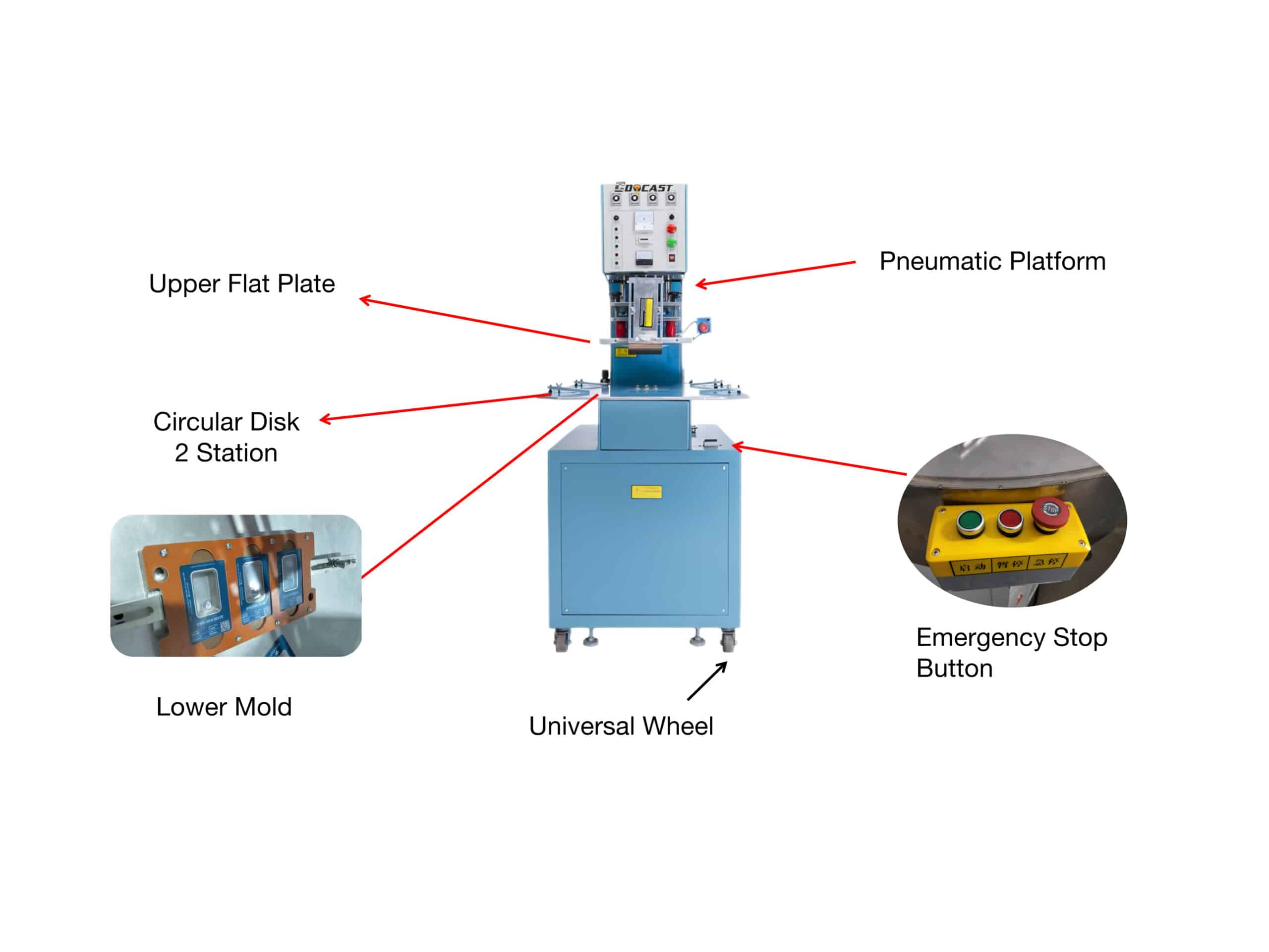
- Rotating square turntable with two stations at 180 degrees.
- Suitable for small and medium batches of gold bars, silver bars and coins.
- Typical production efficiency is about 1,000 pieces per hour depending on product size and sealing area.
- Good for factories moving from manual packaging to semi-automatic blister sealing.
4-station setup
Suitable when the factory needs higher daily output, more consistent rhythm and less manual unloading pressure.
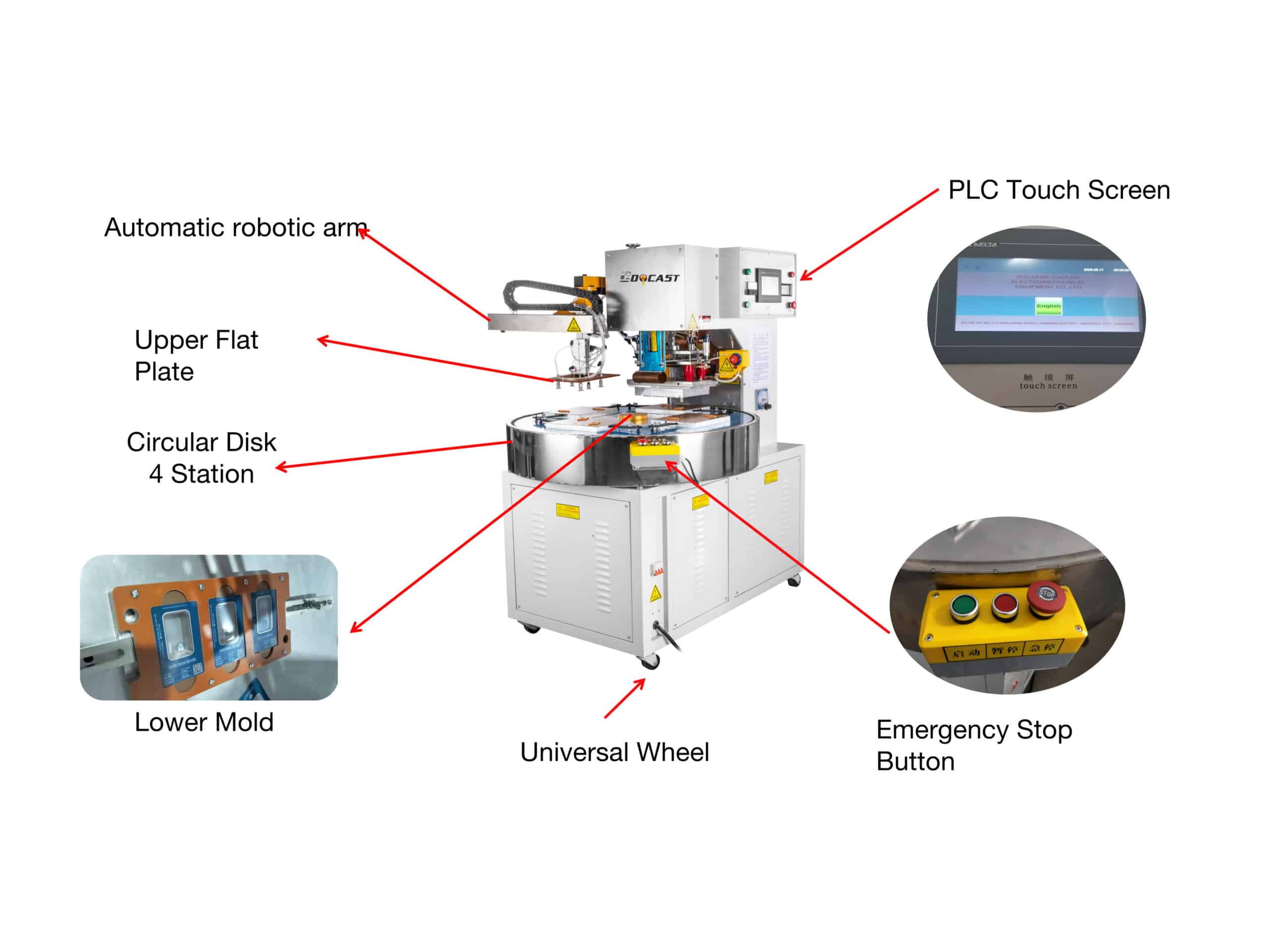
- 1-meter circular turntable with four stations at 90 degrees.
- Can integrate an automatic take-out robotic arm for finished card removal.
- Production efficiency can reach about 2,200 pieces per hour in suitable conditions.
- Touchscreen control can store up to 10 sets of process parameters for product changeover.
Quick Reference
2-station vs 4-station packaging choice
| Item | 2-Station Model | 4-Station Model |
|---|---|---|
| Station design | Two-station square turntable, 180-degree spacing. | Four-station circular turntable, 90-degree spacing. |
| Production method | Manual loading and unloading with alternate sealing. | Continuous cyclic production; loading, sealing and unloading can happen at different stations. |
| Automation level | Simple semi-automatic operation. | Higher automation, optional robotic arm for finished blister cards. |
| Suitable use | Single product specification, moderate orders, cost-focused projects. | Large batches, frequent packaging, higher daily output and stronger consistency requirements. |
| Investment logic | Lower machine cost and easier operation. | Higher initial cost but lower labor pressure and better output per operator. |
Process Explanation
How APET high-frequency blister sealing works
Technical Notes
Technical details that affect blister packaging quality
APET high-frequency sealing
The machine is designed for APET thermoplastic blister packaging. The sealed edge is smooth, strong, airtight and tamper-evident without touching the precious metal surface.
Automatic sensing and lifting
Sensors detect turntable positioning. The welding head descends automatically, completes the sealing cycle, and rises after the process is finished.
Safer operator layout
Loading and unloading can be arranged away from the welding area, reducing operator fatigue and improving safety during repeated packaging work.
Parameter storage
The intelligent control system can store up to 10 sets of process parameters, making it easier to switch between bar sizes, coin cards and blister molds.
Spark and overcurrent protection
Imported dual-tube spark protection and automatic overcurrent protection help protect the mold, vacuum tube and high-frequency system during production.
Stable electrical components
Omron relays, CKC timers, stepless current adjustment, high-frequency shielding and cooling fan design support stable long-time operation.
Brand Packaging
Custom blister cards for bullion brands and anti-counterfeiting
For gold and silver bar packaging, the printed card can be customized with brand logo, product weight, purity, serial number, QR code, barcode and NFC anti-counterfeit function. The mold can also be made according to the size of the bar, coin, medal or pendant.
This is useful for refineries, mints and bullion dealers who want one packaging line to support retail display, brand recognition, product traceability and tamper-evident protection.
Before confirming the machine, prepare these details
- Product size, thickness and weight range.
- Blister material and card material requirements.
- Expected daily output and number of operators.
- Card design, logo, barcode, QR code or NFC anti-counterfeit requirements.
- Whether automatic finished product removal is required.
Further Reading
Useful pages for complete gold and silver bar production
FAQ
FAQ about exclusive blister packaging for gold and silver bars
Should I choose a 2-station or 4-station blister packaging machine?
Choose the 2-station model if you have moderate output, one main product size and a lower budget. Choose the 4-station model if you need continuous production, automatic take-out and higher daily output for gold bars, silver bars or coins.
Can the blister mold and card be customized?
Yes. The mold can be made according to your bar, coin or medal size. The backing card can be customized with brand logo, purity, weight, QR code, barcode, serial number and NFC anti-counterfeit design.
What material is suitable for gold silver bar blister packaging?
APET is commonly used because it supports clear display and high-frequency sealing. The final material choice should match the product size, card structure, sealing strength and appearance requirements.
Will the high-frequency sealing process damage the gold or silver bar?
No. The sealing area is around the blister and card edge. The precious metal product stays inside the blister cavity, so the machine seals the package without pressing or heating the product surface directly.
Packaging Advice
Need help confirming a blister packaging plan?
Send CDOCAST your product size, card design target, material request and expected output. Our team can help you check whether a 2-station or 4-station blister packaging setup is more suitable for your gold bars, silver bars, coins or medals.