
How to Make Karat Gold Granules
Karat Gold Granulation Guide
How to Make Karat Gold Granules
Making karat gold granules is different from granulating pure 24K gold. Karat gold contains silver, copper, zinc or other alloy metals, so the melt has higher viscosity, more oxidation risk and a higher chance of crucible hole clogging.
This guide explains the practical production logic: how to melt 14K and 18K gold alloy, how to choose crucible hole size, when to use a graphite stopper rod, and how to reduce retained metal loss during karat gold granulation.

Direct Answer
What is the correct way to make karat gold granules?

To make karat gold granules, melt the gold alloy completely, keep stable heating during the full granulation cycle, remove slag when needed, then open the graphite stopper rod so the molten alloy flows through a matched crucible hole into cooling water. For karat gold, the crucible usually needs larger holes and fewer outlets than pure gold because 14K and 18K alloys flow less easily.
Production Flow
Karat gold granulation process step by step
Karat Gold vs Pure Gold
Why karat gold needs a different granulation setup
| Production factor | Karat gold granulation | Pure gold granulation |
|---|---|---|
| Material composition | Gold alloy with silver, copper, zinc, nickel or other metals. Common examples include 18K gold and 14K gold. | Usually 24K or Au99.9% and above, with fewer alloying elements and less impurity behavior. |
| Fluidity | Lower fluidity and higher viscosity. The melt can stop flowing if heat is not stable or if the hole is too small. | Excellent fluidity. The molten gold flows more evenly through small holes. |
| Oxidation and slag | More oxidation risk because copper and other alloy metals can form slag. Slag may block the crucible hole. | Less slag, cleaner melt and easier granulation control. |
| Typical crucible hole | Usually about 1.2-2.0 mm, depending on alloy, capacity and desired granule size. | Often about 0.8 mm with a small-hole, multi-hole design for fine and uniform granules. |
| Stopper rod | Recommended, especially for small and medium capacity. It helps prevent early flow and reduces retained metal loss. | Optional in some conditions. Pure gold can use controlled stopper mode or free-flow mode depending on material size. |
Crucible Design
How to choose crucible hole size for karat gold granules
For karat gold, the most important point is not only the machine capacity. The crucible outlet must match the alloy fluidity. If the hole is too small, 18K or 14K gold alloy may clog before the batch is finished. If there are too many holes in a small crucible, the pressure at each hole becomes too low and the remaining metal may stay inside.
- Small to medium capacity, such as 2-4kg: single-hole crucible with graphite stopper is usually safer.
- Larger capacity, such as 6kg and above: more holes can be used if the melt level and pressure are enough.
- A steeper graphite bottom plug taper helps viscous karat gold flow with less adhesion.
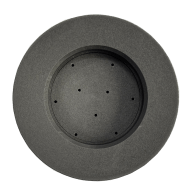
Crucible outlet example
The outlet design directly affects granule size, flow speed, clogging risk and retained metal loss.
Troubleshooting
How to reduce clogging when granulating 14K and 18K gold
Keep heating during flow
Do not stop heating immediately after melting. Karat gold needs sustained heating through the granulation cycle to keep the alloy fluid.
Remove slag before opening
Copper and other alloy metals can oxidize. Skimming slag before opening the stopper reduces the chance of blocking the crucible hole.
Match hole size to alloy
Karat gold usually needs larger holes than pure gold. The correct hole design depends on alloy formula, capacity and granule size target.
Equipment Selection
Recommended equipment for karat gold granulation
For stable karat gold granule production, the machine should provide enough melting power, controlled bottom pouring, a suitable graphite crucible, water cooling and a collection system. If the granules will be used for refining, alloying, jewelry casting or continuous production, the equipment setup should be selected around your batch weight and alloy type.
Buyer Notes
Questions to confirm before choosing a karat gold granulating machine
What alloy will you process?
14K, 18K and higher karat alloys may need different melting temperature control and crucible outlet design.
What batch capacity?
Small batches need concentrated pressure and controlled flow. Larger batches can use more holes for better output.
What granule size?
Fine granules, standard granules and fast melting feedstock may require different hole diameter and water cooling setup.
Project Inquiry
Send your alloy type and batch capacity for crucible advice
For a more accurate recommendation, send the karat value, target batch weight, granule size requirement and whether the material is clean scrap, casting grain or mixed refining feedstock.