
How to Cast Perfect Mirror Surface Gold Silver Bars
Gold Silver Bar Casting Guide
How to Cast Perfect Mirror Surface Gold Silver Bars
Casting a mirror surface gold bar or silver bar depends on more than the casting machine itself. Material purity, graphite mold temperature, vacuum time, cooling speed, machine levelness and melting parameters all affect the final bar surface.
This guide explains how to troubleshoot common gold bar casting defects such as graphite residue, bubbles, dents, bulges, uneven thickness, ripples and impurity marks when using a vacuum gold bar making machine.

Direct Answer
What makes a gold silver bar surface become mirror bright?
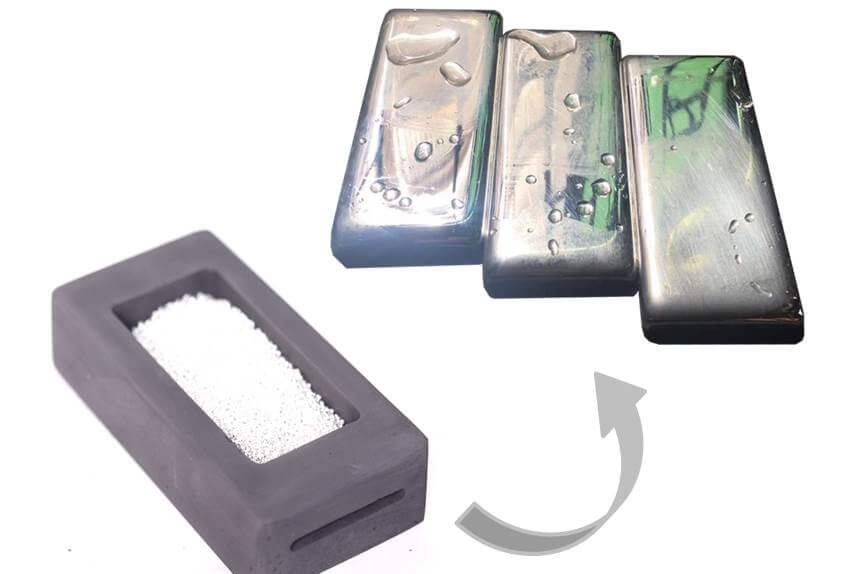
A mirror surface gold silver bar needs clean raw material, complete melting, a preheated graphite mold, enough vacuum time, proper delayed heating, stable cooling water and a level machine base. If one of these conditions is unstable, the bar may show bubbles, dents, ripples, graphite residue or uneven thickness even when the same machine is used.
CDOCAST Technical Note
For bullion mints, refineries and precious metal factoriesCDOCAST designs vacuum gold bar casting solutions for manufacturers who need repeatable mirror surface gold bars, silver bars and investment bullion products. For stable production, the casting machine, graphite mold, raw material preparation, vacuum control and cooling system should be considered together instead of as separate steps.
Use this page to compare common casting defects with possible causes, then adjust mold preheating, vacuum time, cooling water, machine levelness or material purity based on the actual surface problem.
Stable Casting Workflow
Process controls for mirror surface gold and silver bars
Operation Guidance
Operation guidance for vacuum bar casting machine setup
Before judging a casting defect, first confirm the basic operating conditions below. These checks help operators separate machine setup issues from real material or mold problems.
Problems and Solutions
Gold silver bar casting defects, causes and numbered solutions
1. Graphite residue on the bar surface
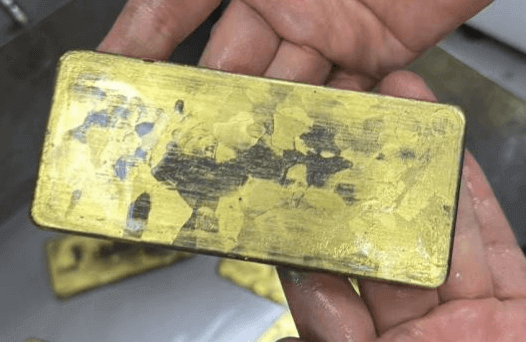
Causes
Graphite may shed slightly at high temperature, especially when the mold is new. The first 1-5 casts may produce more graphite dust until a denser surface layer forms.
Old molds, micro-cracks and temperatures above 1100°C can also increase graphite oxidation and shedding.
Solutions
- Use the first few casts as trial runs when the graphite mold is new.
- Clean loose graphite powder from the mold surface before production.
- Replace molds with cracks, loose edges or obvious surface wear.
- Control melting temperature around 1064-1080°C when suitable for the material.
2. Bubbles on the gold bar surface
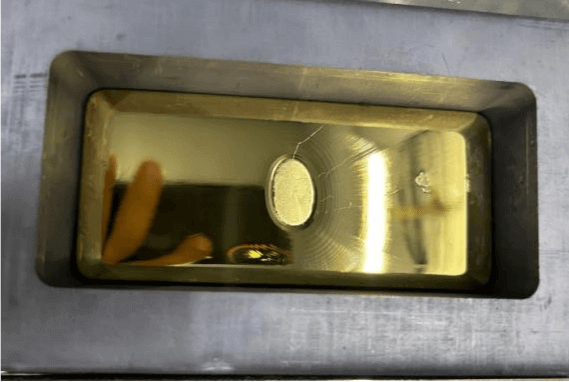
Causes
Bubbles can come from prolonged heating, localized overheating, insufficient vacuum time, lower vacuum pump efficiency or moisture and oil on an unpreheated mold.
Solutions
- Reduce unnecessary heating time and avoid localized overheating.
- Extend vacuum time until the mold cavity reaches stable negative pressure.
- Check vacuum pump efficiency, sealing rings and pipe connections.
- Preheat the graphite mold for about 1 minute before adding material.
3. Dents or shrinkage marks
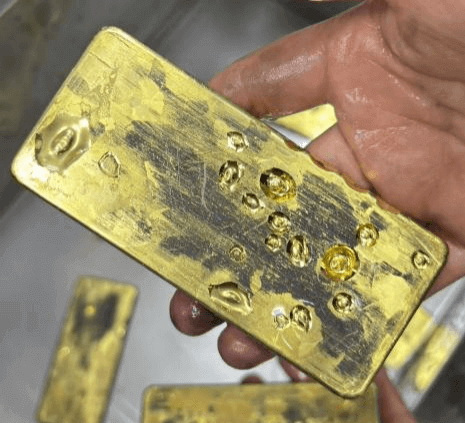
Causes
Slow cooling can prolong solidification. Excessive vacuum pressure may draw incompletely solidified metal and create voids. Inadequate vacuum time can trap gas in the molten metal.
Solutions
- Lower the chiller temperature to help the bar solidify faster.
- Check whether vacuum pressure is too high for the current bar size.
- Extend vacuum time if gas removal is not enough.
- Keep cooling water flow stable during repeated casting.
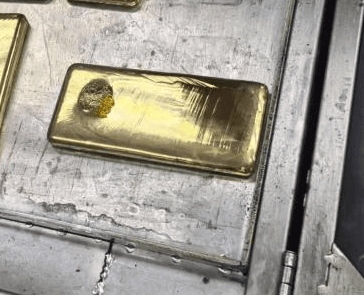
4. Bulges on the bar surface
Causes
Inner bulges may indicate insufficient heating and unmelted gold. Outer bulges can be caused by excessive vacuum pressure pulling unsolidified metal upward. Slow cooling combined with high vacuum can extend solidification and worsen this problem.
Solutions
- For inner bulges, increase heating time so the metal melts completely.
- For outer bulges, reduce vacuum pressure below -20 kPa as a starting test.
- Lower chiller temperature to speed up solidification.
- Do not increase heating, vacuum and cooling changes at the same time.
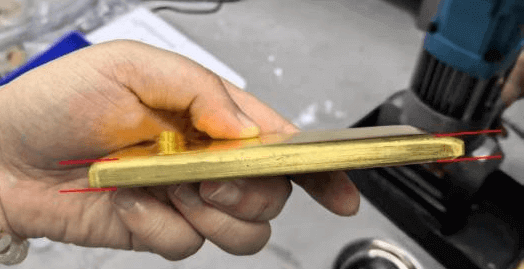
5. Different thickness at two ends
Causes
Improperly adjusted feet or ground settlement over 0.5 degrees can make the machine base uneven. Mixed gold from different batches can also change fluidity.
Solutions
- Use a precision level with 0.02 mm/m accuracy to check the machine base.
- Adjust the machine feet until deviation at all four corners is no more than 0.1 mm.
- Check levelness before daily production, especially after moving the machine.
- Pre-melt mixed batches before casting to improve material consistency.
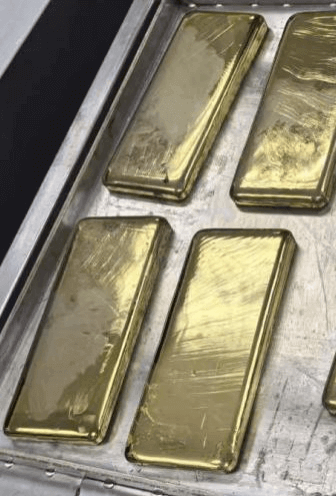
6. Ripples or flow marks on the gold bar surface
Causes
Localized cold zones in the graphite mold, especially near edges, can cause premature solidification and shrinkage patterns. Mixed gold material, different purity batches and oxidized impurities can also create flow layering.
Solutions
- Improve mold preheating and avoid cold zones near the mold edges.
- Use the same batch of gold or silver for each casting test.
- For recycled material, refine or pre-purify the metal before mirror surface casting.
- For impurity-related flow problems, test a very small amount of flux, such as no more than 0.1% borax.
7. Dull surface caused by special impurities

Causes
Gold bars may contain impurities such as lanthanum or titanium. These metals can have higher melting points and lower density than gold, so they float to the surface during melting and create a non-lustrous appearance.
Solutions
- Use spectrometry to identify special impurities such as La or Ti.
- For La contamination, treat with dilute H2SO4 or HCl before re-casting.
- For Ti contamination, use professional chemical treatment only under safe controlled conditions.
- If production time is critical, use a clean new 9999 purity raw material batch for comparison.
8. Rough wrinkles, small black dots or no mirror brightness

Causes
Rough wrinkles and small black dots are often related to raw material cleanliness. Sponge gold or refined gold powder may still contain acid, reducing agent residue or washing chemicals if acid washing and water washing are not complete.
Non-metal impurities such as sulfur and phosphorus, or special elements such as rhenium and titanium, can also disturb surface crystallization and create black dots or a dull surface.
Solutions
- Clean sponge gold thoroughly before vacuum gold bar casting.
- After nitric acid washing, use pure water or distilled water until chemical residue is removed.
- If black dots can be picked out with a sharp needle, treat the material and then re-melt.
- If the issue remains after process adjustment, compare with a clean 9999 purity gold batch.
Related Process Pages
CDOCAST equipment pages for stable mirror surface bar casting
Best practice summary
- Start with clean raw material and a preheated graphite mold.
- Adjust only one parameter at a time during casting tests.
- Record heating time, vacuum time, cooling time, delayed heating and surface result.
- When defects remain after parameter adjustment, check raw material purity and impurity content.
When to ask CDOCAST for support
Send the bar weight, purity, mold photo, defect photo, vacuum pressure, heating time and cooling water temperature. These details help identify whether the issue comes from material, graphite mold, vacuum setting, cooling speed or machine levelness.
Project Inquiry
Send your bar size and surface issue for casting advice
For faster support, send the bar weight, material purity, machine model, mold type, vacuum time, cooling water temperature and a photo of the surface defect.