
How to Cast Flawless Platinum, Palladium, and Stainless Steel Jewelry
Platinum Casting Buyer Guide
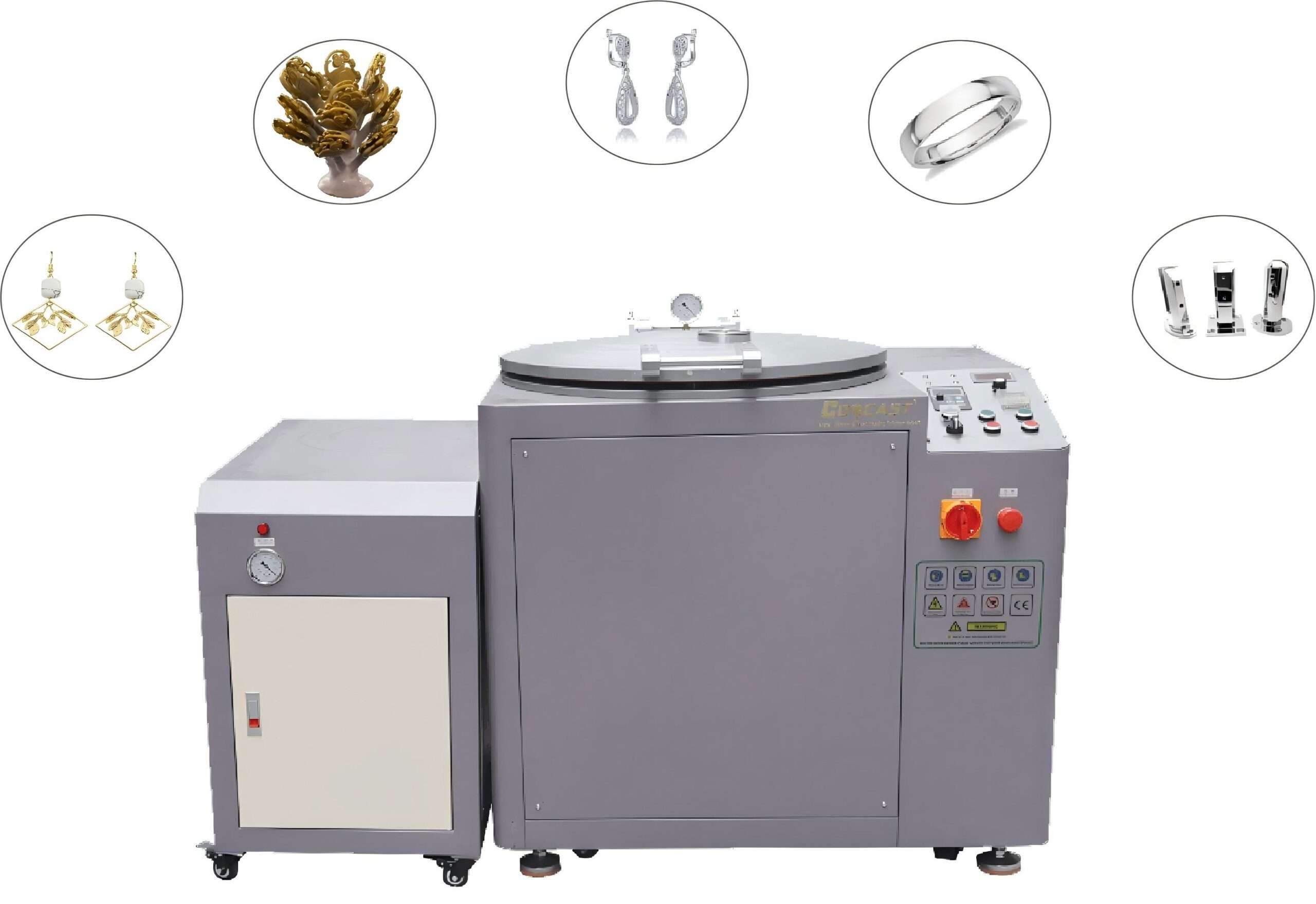
How to Cast Flawless Platinum with a Vacuum Centrifugal Casting Machine
Casting platinum is more difficult than casting gold or silver because platinum has a much higher melting point, loses heat quickly, and is sensitive to mold temperature, vacuum condition, centrifugal force and crucible contamination.
K gold, yellow gold, silver and copper jewelry are usually suitable for vacuum pressure casting. Platinum should normally use centrifugal vacuum casting because the metal cools faster and needs stronger filling force for fine details.
This guide explains how to reduce platinum casting porosity, pinholes, incomplete filling, cracks and dull surfaces when producing platinum jewelry, palladium alloy parts or small high-temperature castings.
Casting Method Selection
Vacuum pressure casting and centrifugal casting are not for the same metals
Vacuum pressure casting
Vacuum pressure casting is usually suitable for K gold, yellow gold, silver and copper jewelry casting. These metals have better flow behavior than platinum, so pressure casting can produce stable filling when the flask temperature, alloy cleanliness and vacuum pressure are controlled correctly.
- Suitable for K gold jewelry casting, gold casting, silver casting and copper alloy casting.
- Good for rings, pendants, small jewelry parts and ordinary lost wax casting work.
- More practical when the metal does not need the very high casting force required by platinum.
Centrifugal vacuum casting
Platinum casting should normally use centrifugal vacuum casting. Platinum melts at about 1768°C and its effective filling window is short. Centrifugal force helps push the dense molten platinum into fine details before the metal loses fluidity.
- Better for platinum jewelry, palladium alloy and high-temperature precision casting.
- Helps reduce incomplete filling in thin claws, ring details and small channels.
- Works with vacuum to reduce gas defects and with rotation speed control to improve filling stability.
Direct Answer
What is the correct way to cast flawless platinum?
The correct method is to use a centrifugal vacuum casting machine with proper mold preheating, clean crucible selection, effective vacuum and controlled centrifugal casting force. For platinum and palladium jewelry casting, the machine must keep the metal fully molten until the moment of casting and immediately complete mold filling.
A vacuum centrifugal casting machine for platinum is practical for small batch work because vacuum helps remove air and centrifugal force helps push the dense molten metal into fine details before it cools.
Important purchasing note
Do not choose a platinum casting machine only by melt weight. Buyers should confirm the real platinum material form, casting weight, flask size, mold material, target detail level, required surface finish and whether palladium or stainless steel will also be cast.
For buyers comparing a platinum casting crucible, platinum casting mold temperature, platinum casting pinholes and platinum casting porosity problems, the correct solution is usually a combination of material preparation, mold control and machine configuration.
Machine Range
CDO-CE15 / CDO-CE20 casting range
- CDO-CE15: suitable for about 300g and 500g platinum or palladium casting jobs.
- CDO-CE20: suitable for about 1000g small batch casting work.
- Vacuum: around 0.1MPa vacuum condition helps reduce gas defects.
- Centrifugal speed: 0-700 rpm adjustable for different mold and part structure.
- Flask: suitable for about 3.5 x 4 inch investment flask size.
Casting Difficulty
Why is platinum harder to cast than gold or silver?
- Higher melting temperature: platinum melts at about 1768°C, so the crucible, heating system and casting chamber must be suitable for high-temperature service.
- Fast cooling: platinum can lose fluidity quickly during transfer, causing incomplete filling in thin parts or detailed jewelry patterns.
- Gas and shrinkage defects: moisture, poor burnout, weak vacuum and wrong sprue design can cause platinum casting porosity and pinholes.
- Contamination risk: wrong crucible material, dirty scrap or mixed casting tools can affect platinum surface quality and alloy purity.
Practical Process
Platinum casting process for better surface and detail
Troubleshooting
Common platinum casting defects and how to solve them
| Problem | Likely Cause | Recommended Adjustment |
|---|---|---|
| Pinholes or porosity | Moisture in investment, incomplete burnout, weak vacuum, gas trapped in sprue design. | Dry the mold fully, extend burnout, check vacuum pump performance, improve sprue and reservoir design. |
| Incomplete filling | Metal temperature too low, mold too cold, centrifugal force too weak, thin channel design. | Increase casting temperature within safe range, preheat mold correctly, adjust rotation speed and redesign feed channels. |
| Cracks after casting | Thermal shock, unsuitable investment, cooling too fast, sharp design transitions. | Use suitable investment, control cooling time, avoid sudden quenching and improve part radius design. |
| Dull or contaminated surface | Wrong crucible, dirty recycled platinum, mixed tools or excessive oxidation. | Use clean platinum material, separate tools for platinum alloys, confirm crucible choice and reduce contamination sources. |
| Shrinkage cavity | Poor sprue reservoir, uneven section thickness, insufficient feeding during solidification. | Improve sprue position, add proper reservoir volume and avoid large isolated thick sections. |
Machine Selection
Key specifications to confirm before buying
- Target metal: platinum, palladium, platinum alloy or stainless steel.
- Real casting weight: common small batches are around 300g-1000g.
- Vacuum performance and vacuum pump maintenance requirements.
- Adjustable centrifugal speed, commonly up to around 0-700 rpm depending on machine design.
- Compatible flask size, mold height and casting chamber structure.
- Temperature measurement method for high-temperature platinum casting.
- Crucible material and expected crucible life under platinum work.
- Training support for burnout, mold preheating, casting speed and defect inspection.
Information to send for a correct quotation
For a more accurate platinum casting machine recommendation, send the material type, alloy composition, maximum casting weight, sample photo or CAD drawing, flask size, required daily output and the main defect you want to solve.
If you cast platinum powder, sponge platinum or recycled platinum, mention it clearly. Material form affects heating behavior, crucible choice, mold filling and final surface stability.
Send Casting DetailsRelated Equipment
Useful CDOCAST pages for platinum and casting buyers
FAQ
FAQ about platinum casting machines and casting defects
What machine is best for casting platinum jewelry?
A vacuum centrifugal casting machine is a practical choice for small batch platinum jewelry casting because vacuum helps reduce gas defects and centrifugal force helps fill fine details before the metal cools.
What is the difference between vacuum pressure casting and centrifugal casting?
Vacuum pressure casting is usually suitable for K gold, yellow gold, silver and copper jewelry casting. Platinum normally needs centrifugal vacuum casting because platinum has a much higher melting point, cools quickly and needs stronger filling force for fine details.
Why is platinum casting more difficult than gold casting?
Platinum melts at about 1768°C and cools quickly. It requires stronger high-temperature equipment, suitable crucibles, accurate mold preheating and better control of vacuum and casting force.
What causes pinholes in platinum casting?
Pinholes are commonly caused by moisture in the investment mold, incomplete burnout, weak vacuum, trapped gas in the sprue system or contaminated platinum material.
How can I prevent platinum casting porosity?
Use clean platinum material, dry and burn out the mold correctly, check the vacuum system, avoid turbulent feed design and use a suitable sprue reservoir for solidification feeding.
Can the same machine cast platinum, palladium and stainless steel?
Some vacuum centrifugal casting machines can be configured for platinum, palladium and stainless steel, but the melting system, crucible, mold and process settings must be confirmed before purchase.
What crucible should be used for platinum casting?
Quartz crucibles are common and more economical for many platinum applications. Zirconia crucibles are better for strict purity requirements, but they are expensive and can crack easily.
What capacity should I choose for platinum casting?
Choose by real casting weight and flask size. For many small jewelry and laboratory applications, 300g-1000g is a common working range, but the final selection depends on product size and alloy type.
Why does platinum fail to fill thin details?
Thin details may fail when the metal temperature is too low, the mold is too cold, the channel is too narrow or the centrifugal force is not enough for the casting geometry.
Should I use one crucible for different platinum alloys?
For high-value platinum work, it is better to separate crucibles and tools by material type. Cross-use can introduce contamination and reduce surface quality.
What should I send before buying a platinum casting machine?
Send your metal type, alloy composition, casting weight, sample drawing or photo, flask size, daily output and current casting defects. This helps CDOCAST recommend the correct platinum casting solution.
Get a Practical Recommendation
Send your platinum casting sample and target capacity
CDOCAST can help check whether your project needs a centrifugal vacuum casting machine, vacuum pressure casting machine or a custom high-temperature platinum casting solution.